Get Full Government Meeting Transcripts, Videos, & Alerts Forever!
Get email alerts on the Whistleblower Protection topic
No spam. Unsubscribe anytime.
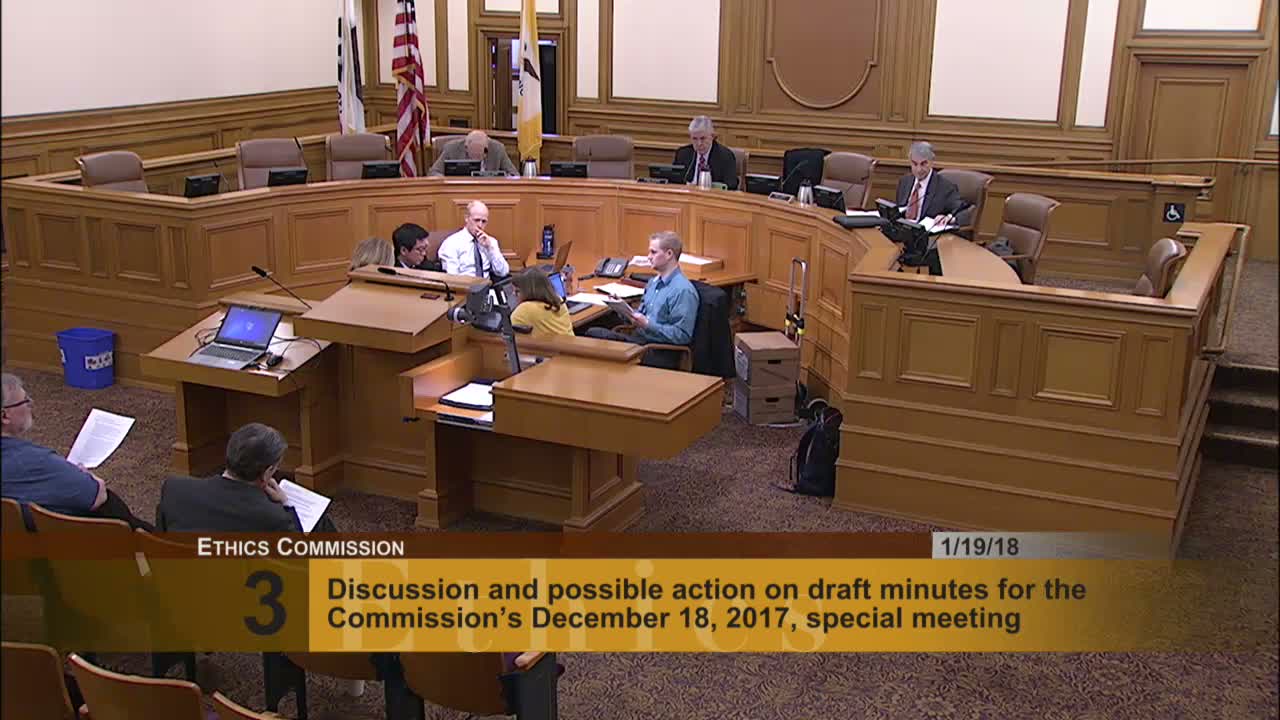
San Francisco Ethics Commission adopts 2017 whistleblower protections, setting meet-and-confer next steps
Summary
The Ethics Commission voted 3-0 to adopt a revised 2017 Whistleblower Protection Ordinance and directed staff to proceed through required meet-and-confer talks with unions and city departments before placing the measure on a ballot or sending it to the Board of Supervisors.
The San Francisco Ethics Commission voted unanimously to adopt the 2017 version of the city's Whistleblower Protection Ordinance, a staff-drafted update aimed at expanding and clarifying protections for whistleblowers and the processes supervisors must follow when they receive complaints.
Staff presented the 2017 draft as an evolution of proposals developed after a 2014'15 civil grand jury report. The version before the commission adds supervisor training requirements, clarifies duties between the controller's office and the Ethics Commission, and contains provisions to discipline city officers or employees who retaliate against city contractors engaged in protected activity. Staff urged the commission to adopt the 2017 text and continue meet-and-confer discussions with labor and other city offices.
Deputy Director Blum and legal counsel told commissioners that a key portion of the draft'the requirement that supervisors report allegations of retaliation to the Ethics Commission and face penalties'is subject to meet-and-confer with unions. City counsel also warned that some proposed provisions may fall outside the Ethics Commission's jurisdiction and could need to be bifurcated before a ballot placement or Board of Supervisors action.
The commission discussed how meet-and-confer typically proceeds in 2'3 sessions and heard staff's explanation that removing the meet-and-confer portion would substantially weaken protections the 2017 draft seeks to add. Commissioners pressed staff for timelines; staff reported a second meet-and-confer was scheduled for Jan. 24 and said they were optimistic the process could conclude quickly enough to preserve a June ballot timeline if commissioners decide to place parts of the measure before voters.
Members of the public urged further changes to evidentiary standards. Dr. Derek Kerr, who identified himself as a whistleblower, said, "No whistleblower retaliation claim has ever been substantiated by the Ethics Commission," and argued the current evidentiary standard is too high because complainants lack access to evidence held by respondents. Kerr recommended a lower threshold ("reasonable cause" or "contributing factor") similar to OSHA practice to increase substantiation and enable subpoenas and depositions when needed.
Staff responded that the 2017 draft retains language adopted in 2016 clarifying that the stricter "substantial motivating factor" standard does not apply at the preliminary review stage. Deputy Director Blum said staff "stand in the shoes" of complainants during investigations and have authority to subpoena records, issue preservation letters and interview witnesses, thus reducing the plaintiff's procedural burden during preliminary review.
After debate and public testimony, a motion to adopt the 2017 version (as amended in drafting) was moved and seconded; the motion passed by voice vote, 3-0. Commissioners and staff agreed to complete meet-and-confer steps with the unions and to seek legal guidance on which provisions must be separated if they fall outside the commission's jurisdiction. The commission noted that whether to place an ordinance on the June ballot depends on completing required procedures and on what the city attorney's office determines can legally be put before voters.
What happens next: staff will continue the meet-and-confer process with unions and city departments, complete any required legal analysis on jurisdictional limits, and return to the commission with revised text or recommendations for ballot placement or submission to the Board of Supervisors.