Get Full Government Meeting Transcripts, Videos, & Alerts Forever!
Get email alerts on the Enforcement Regulations topic
No spam. Unsubscribe anytime.
Ethics Commission delays vote on revised enforcement rules after public input on Sunshine referrals
Summary
The San Francisco Ethics Commission postponed final adoption of new enforcement regulations — including a proposal to defer findings of fact from the Sunshine Ordinance Task Force — after commissioners sought legal analysis and time to review last-minute comments from the City Attorney and the Task Force.
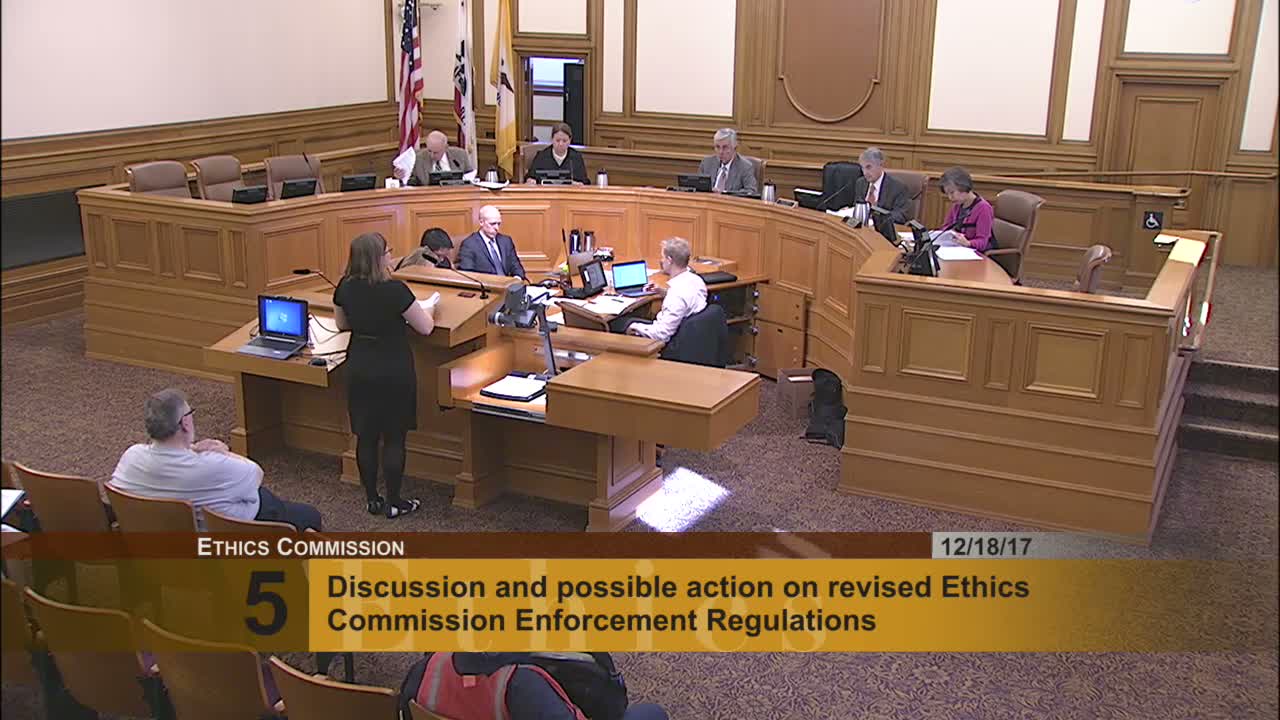
The San Francisco Ethics Commission on Dec. 13 postponed final action on a package of revised enforcement regulations that would change how the commission handles enforcement and Sunshine Ordinance referrals.
Deputy staff presented the draft rules, saying they would delegate probable-cause authority to the executive director, formalize investigative responsibilities for the deputy director, convert probable-cause findings into charging documents for hearings, and combine the Ethics Commission's enforcement rules with the Sunshine Ordinance regulations. The draft would also codify a waiver policy by regulation rather than by practice.
The most consequential change under discussion would permit the commission to defer to findings of fact reached by the Sunshine Ordinance Task Force when the task force refers a matter for enforcement. Staff said the Administrative Code (section 67.3) authorizes the task force to refer matters to municipal offices with enforcement authority and proposed that the commission "defer to orders of determination from the Sunshine Ordinance Task Force in terms of their findings of fact," while still reviewing legal conclusions de novo and preserving a remand option if substantially new evidence arises.
Commissioners pressed staff and legal counsel for clarity on whether the law already requires deference or whether the regulation would be a policy change. Commissioner questions requested a short written memorandum of law explaining "whether the law now requires this commission to accept — analogous to a court of appeal — the findings of fact of the Sunshine Ordinance Task Force." Staff said the Sunshine Ordinance is not specific on that question and the proposed regulation seeks to clarify the Commission's practice.
Public speakers were sharply divided. Victor Young, administrator for the Sunshine Ordinance Task Force, and other commenters urged that the Ethics Commission "be only determining what enforcement action should be taken and not re-adjudicating the complaints," arguing that the Task Force conducts multi‑hearing fact-finding that should not be relit igated. Other members of the public recounted cases they said the Task Force had referred to the Ethics Commission with unsatisfied remedies and urged stronger enforcement.
Given two last-minute written submissions (including from the City Attorney's office) and the legal questions raised by commissioners, staff recommended and the Commission agreed to defer a final vote so the documents could be reviewed and a legal memo prepared. The matter was continued to the January meeting for final language and a vote.
The Commission also considered procedural changes to show-cause hearings, including increasing public speaking time from 5 to 10 minutes per party; commissioners debated whether to reserve time for rebuttal or allow parties to allocate the 10 minutes as they prefer.
Next steps: staff will circulate the two late written comments, provide the requested memorandum of law on the deference question, and return a final draft for a vote in January.