Get Full Government Meeting Transcripts, Videos, & Alerts Forever!
Get email alerts on the Campaign Finance topic
No spam. Unsubscribe anytime.
Staff outlines revised Prop J to tighten pay‑to‑play rules; stakeholders urge more time
Summary
Staff presented a legal and implementation analysis of a revised Proposition J to expand conflict‑of‑interest and public‑benefit prohibitions; advocates and service providers said the packet was large and urged more interested‑persons meetings and longer comment windows.
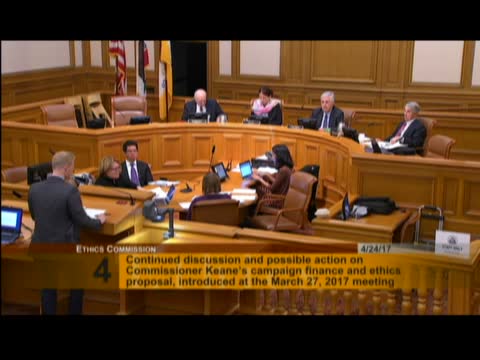
City staff presented a detailed memo and PowerPoint summarizing a proposed revision to Proposition J — a package of changes to the City’s campaign finance and conflict‑of‑interest rules (CFRO).
Senior policy analyst Kyle Kundert walked commissioners and the public through the draft’s major components: broader definitions of covered officials and public benefits; expanded enforcement tools (including debarment and citizen suits); fundraising bans for certain high‑ranking officials; and a proposed public‑benefit database to track recipients. Staff emphasized constitutional constraints, noting First Amendment considerations and case law including Buckley v. Valeo, and highlighted the need to draft narrow, legally defensible language.
Kundert said staff is seeking to harmonize the revised Prop J with existing provisions of the Political Reform Act and CFRO, to craft implementation details with the controller’s and city attorney’s offices, and to hold interested‑persons meetings. He announced two meetings at the Ethics Commission office (25 Van Ness) on May 9 at 5:30 p.m. and May 11 at noon and said the presentation materials would be posted online.
Stakeholders including Debbie Lerman of the San Francisco Human Services Network and Fernando Marti of the Council of Community Housing Organizations thanked staff for the analysis but urged more time and outreach. Lerman said the packet was large and arrived late: "I am confused, it's complicated, and it's overwhelming to me on first look." Both speakers asked the commission to delay final action and add more IP meetings and longer comment deadlines so nonprofit contractors, unions and housing coalitions can provide considered feedback.
Commissioners praised the legal analysis and cautioned staff to draft narrowly to survive judicial review and to consider implementation costs — staffing, database creation and interactions with other departments. Staff said it will return with revised language and a timeline for further review.