Get Full Government Meeting Transcripts, Videos, & Alerts Forever!
Get email alerts on the Audit Selection topic
No spam. Unsubscribe anytime.
Staff proposes auditing top‑spending committees to capture 80% of 2016 election spending
Summary
Staff recommended selecting audits by objective criteria (top spenders by committee category) instead of pure random draws; the plan would audit 27 of 114 committees in the audit pool, covering roughly 80% of reported spending for the 2016 cycle.
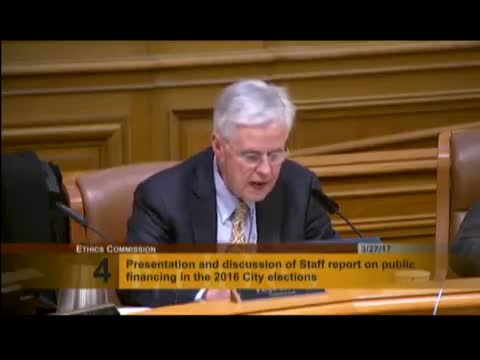
Ethics Commission staff on March 22 proposed a revision to the campaign audit selection method that would prioritize committees where the public interest is greatest — primarily those that spent the most to influence city elections.
Director Pelham said the office would target the "top five in each category of committee" and use objective, cycle‑specific criteria to focus staff resources. "We would be auditing in total 27 committees, which reflects 24% of the committees in that pool, but 80% of the money in that pool," Pelham said, describing results of a five‑year analysis that looked at committee types and spending patterns.
Staff emphasized the change is not intended to target specific candidates or issues, but rather to allocate limited audit resources to where most campaign dollars were spent. Mandatory audits of publicly financed candidates would continue to be handled by the city controller's office under the charter, Pelham said; commission staff would complete remaining audits from prior cycles while adding approximately a dozen additional audits outside public financing.
Commissioners debated whether the methodology should remain an administrative discretion or be codified by ordinance; some members noted other jurisdictions require mandatory audits above a statutory spending threshold. Commissioner Chu pressed for benchmarks and said she favored focusing on a higher percentage of audited funds. Supporters in public comment proposed additional categories (major donors) and recommended prioritizing committees with late or incomplete filings.
Why it matters: Staff said the proposal aims to increase audit coverage of dollars that drive elections while keeping the number of audits manageable given staffing constraints and outstanding audits from prior cycles. The approach would shift scarce enforcement capacity toward the biggest financial players in city campaigns.
Next steps: Commissioners asked staff to refine objective criteria, coordinate with the controller for mandatory audits, and return with recommendations and attachments for final consideration.