Get Full Government Meeting Transcripts, Videos, & Alerts Forever!
Get email alerts on the Enforcement Reform topic
No spam. Unsubscribe anytime.
Ethics staff detail enforcement backlog and plan reforms as preliminary-review caseload doubles
Summary
Enforcement staff told the commission the enforcement caseload in preliminary review rose to 84 matters after investigator losses, prioritized election-related and Sunshine/whistleblower complaints, and proposed regulatory and staffing changes to speed investigations.
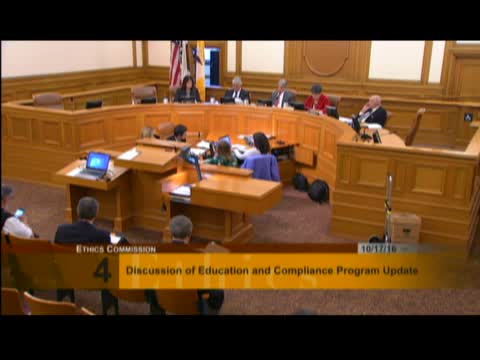
Enforcement staff told the San Francisco Ethics Commission that the number of matters in preliminary review has roughly doubled and that staffing shortfalls are the principal bottleneck slowing investigations.
The presenter reported the office currently has 84 matters in preliminary review, up from about 43 earlier in the year, and said staffing reductions over several years left enforcement with one investigator handling intake and preliminary work. The staff member described the commission’s investigative stages — preliminary review, referral to city/district attorneys for serious matters, probable-cause determination, and administrative hearings — and said the office must improve triage, clarify jurisdictional boundaries, and revise enforcement regulations to reduce time to resolution.
Staff outlined immediate priorities: 1) election-related complaints that affect current campaigns, 2) Sunshine Ordinance and whistleblower complaints that have statutory deadlines and must be presented quickly, and 3) the oldest pending matters. The presenter said the office is developing policies to initiate its own complaints more often, to pursue joint investigations with the Fair Political Practices Commission (FPPC) and district attorney when appropriate, and to propose regulatory changes that would shorten the time between probable-cause findings and the issuance of accusations.
Several commissioners pressed for additional transparency and for a public process to consider regulatory or charter changes. Commissioner Keane and others suggested moving some probable-cause determinations to staff level or appointing a single hearing officer to reduce duplication of fact-finding. The presenter said staff plans to hold public interested-person meetings before drafting rules and to follow a 30-day written comment period before finalizing regulatory recommendations.
The report identified possible short-term fixes including better intake screening to dismiss matters outside jurisdiction and reallocating staff so investigators focus solely on investigations rather than compliance tasks. Staff said two senior investigator positions were expected to be posted soon and hoped to have new hires by year-end or early next calendar year, but cautioned civil-service hiring timelines could delay onboarding.