Get Full Government Meeting Transcripts, Videos, & Alerts Forever!
Get email alerts on the Ethics Settlement topic
No spam. Unsubscribe anytime.
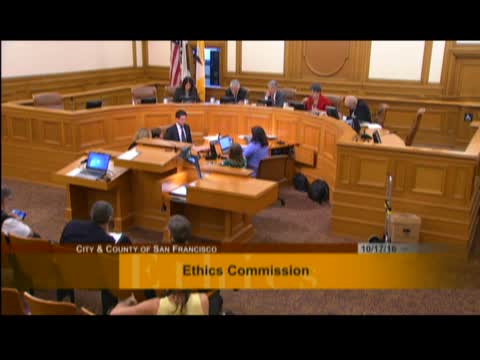
San Francisco Ethics Commission accepts $25,000 settlement from Supervisor Mark Farrell in 3–2 vote
Summary
The Ethics Commission voted 3–2 to accept a $25,000 settlement in its long-running forfeiture action involving Supervisor Mark Farrell after staff warned the commission it faced litigation risk from an anti-SLAPP motion and potential attorney-fee exposure.
The San Francisco Ethics Commission voted 3–2 to accept a $25,000 settlement resolving the commission’s forfeiture action associated with Supervisor Mark Farrell’s 2010 campaign committee.
Chair Rennie, announcing the outcome after the commission reconvened in open session, said the measure passed "3 to 2 in favor of accepting the settlement." Chair Rennie explained that city attorneys and commission counsel had negotiated the settlement in light of a pending anti-SLAPP motion and the risk that the city could be liable for significant attorney fees if the commission lost in court.
City attorney staff told the commission the case faced an early-stage anti-SLAPP challenge and that a California Supreme Court decision had altered the law’s application; staff said that loss on the anti-SLAPP motion could result in dismissal of the city’s case and exposure to Farrell’s legal fees. In response, commissioners and staff negotiated a private settlement that includes a $25,000 payment and language indicating Farrell’s committee accepts responsibility for the wrongful acts of its agents.
Commissioner Keane and Judge Kopp dissented. Keane said he believed Farrell had "a lot to be ashamed of" and objected to recital language in the settlement that he said understates the commission’s view of the facts. Kopp said he would have accepted the monetary settlement but opposed recitals he described as "weasel language" that could be used to minimize responsibility in public discussions.
Supporters of the settlement said returning $25,000 to the city and obtaining an explicit acknowledgement of responsibility by the committee were concrete results after years of litigation risk and procedural uncertainty. Commissioner Hayan said the agreement "returns $25,000 to the voters of San Francisco" and stressed the commission’s intention to improve future oversight and timeliness.
The commission first took the matter up publicly in July and pursued collections through the treasurer; counsel then filed litigation and a subsequent anti-SLAPP motion. With a court hearing scheduled, staff said settlement was the option that best protected the city’s interests. The commission’s public record shows the vote split 3–2, with Judge Kopp and Commissioner Keane recorded as the dissenters.
The commission said it would report the legal posture, the terms of the settlement, and the basis for its decision in the public record. The city attorney’s office led settlement negotiations and presented the proposed agreement both before closed session and in public discussion after the vote.
The matter will be included in upcoming agendas for discussion of process improvements and regulatory changes the commission hopes will reduce future delays and enforcement vulnerabilities.