Get Full Government Meeting Transcripts, Videos, & Alerts Forever!
Get email alerts on the Whistleblower Policy topic
No spam. Unsubscribe anytime.
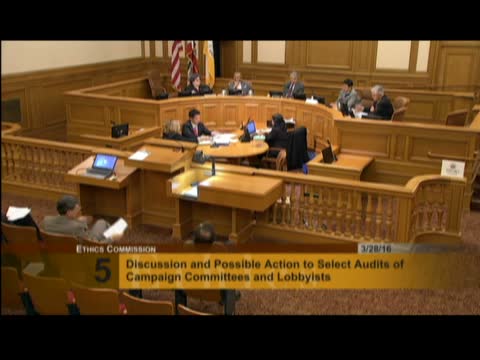
Ethics Commission adopts amended whistleblower regulations; forwards statute changes to Board of Supervisors
Summary
The commission adopted Attachment 1—amended whistleblower regulations—after amending the complaint definition to allow recorded evidence (not just written complaints). It also voted to forward proposed ordinance changes (Attachment 2) expanding protections (including contractors and remedies) to the Board of Supervisors for drafting and potential adoption.
The San Francisco Ethics Commission voted on March 28 to adopt a set of revised whistleblower regulations and to forward proposed ordinance amendments to the Board of Supervisors for further drafting and consideration.
Staff and Commissioner Hur presented regulations and draft ordinance language developed in response to a civil grand jury report. Key regulatory changes adopted (Attachment 1, as amended) include clarifying that a complaint may be an informal writing or other record—such as an emailed report or documented video—so that oral disclosures captured in a record need not be rejected solely because they are not typed submissions. The commission adopted a friendly amendment that removed a strict "written" requirement and instead used the broader term "record," and it gave the executive director authority to make typographical edits.
Attachment 2 contains draft statutory changes the commission asked staff to forward to the Board of Supervisors for consideration. Those draft ordinance changes would, if adopted by the Board, expand the whistleblower protection ordinance to: cover contractors operating within the scope of a contract (and, in practice, staff said they intend to include contractor employees), clarify "improper government activity" to include gross waste, fraud and abuse (rather than relying only on penal-code references), require interagency reporting on referrals, and add possible remedies such as cancellation of retaliatory employment actions and sanctions for disclosure of a whistleblower’s identity. Staff emphasized that ordinance changes require Board action and that the commission can work collaboratively with supervisors on language.
Public commenters—whistleblowers and advocates—urged stronger protections and practical accountability, including a quality-review mechanism for investigations, coverage for contractor employees, and explicit First Amendment protections for city employees. Several speakers also urged that the commission set concrete timelines and follow-up reporting so complainants are kept informed about investigation status.
The commission approved Attachment 1 (the regulations) and voted to send Attachment 2 (the ordinance amendments) forward for Board consideration and staff outreach to supervisor offices. Commissioners asked staff to consult relevant departments about contractor coverage and to return with implementation recommendations and interagency referral timelines.