Get Full Government Meeting Transcripts, Videos, & Alerts Forever!
Get email alerts on the Disclosure Transparency topic
No spam. Unsubscribe anytime.
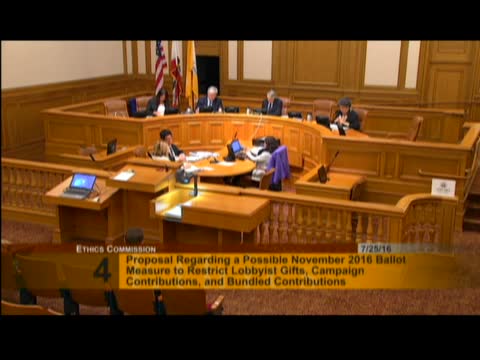
Commission backs staff recommendations on Peskin behested‑payments disclosure proposal after privacy and scope debate
Summary
The commission reviewed Supervisor Peskin's ordinance requiring commissioners and board members to file behested payment reports for solicitations (threshold $5,000), considered carveouts and privacy concerns, and voted to transmit staff recommendations to the supervisor.
The San Francisco Ethics Commission reviewed an ordinance introduced by Supervisor Aaron Peskin proposing that members of city boards and commissions file behested payment reports for solicitations and donations exceeding a $5,000 threshold. Lee Hepner, representing Supervisor Peskin's office, walked commissioners through recent amendments and the rationale behind them.
Key changes Hepner highlighted include defining "auctioneer" and exempting auctioneering from solicitation reporting, creating a definition of "interested party" tied to administrative action, expanding certain filing periods to quarterly/90 days for $5,000 contribution thresholds, and carving out nonprofit staff whose primary job is fundraising from reporting requirements. Staff also recommended flexible electronic filing methods to reduce administrative burdens.
Commissioners and members of the public debated the measure's breadth. Several commissioners asked whether the reporting should be narrowly tailored to solicitations that have a nexus to matters the commissioner could influence; others warned that narrowing could leave suspicious activity undisclosed. Staff and the City Attorney described how elected officials are already subject to similar $5,000 reporting obligations and noted the policy tradeoffs between transparency and donor privacy.
Public commenters were split. Bob Dockendorf (Friends of Ethics) and other advocates urged broad disclosure, noting large amounts raised through behested solicitations. Jonathan Mincer, a political attorney, called the proposal "a solution in search of a problem" and warned it could become a "trap for the unwary" that deters service and invades donor privacy. Representatives of nonprofit organizations praised narrow exemptions for professional fundraisers and cautioned against hampering legitimate fundraising.
A commissioner moved to adopt the staff recommendations and transmit them to Supervisor Peskin; the motion was seconded and carried unanimously. The commission's transmittal noted support for the ordinance's intent while asking that staff‑identified concerns be addressed.
Next steps: staff will transmit the commission's recommendations to Supervisor Peskin and work with the Ethics Department on implementation details, including possible resource requests to build an electronic filing mechanism and finalize the effective date.