Get Full Government Meeting Transcripts, Videos, & Alerts Forever!
Get email alerts on the Campaign Finance Reform topic
No spam. Unsubscribe anytime.
Ethics Commission endorses Peskin proposal to ban candidate-controlled general purpose committees
Summary
The Commission voted 4-0 to support Supervisor Aaron Peskin—s proposal to prohibit elected officials from establishing candidate-controlled general purpose committees, calling them a loophole that can circumvent contribution limits and create special access.
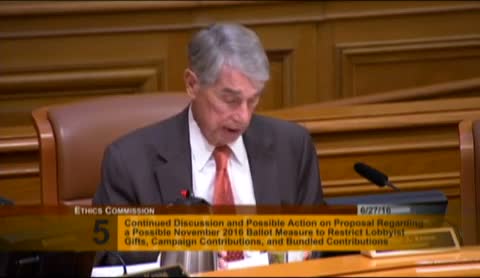
The San Francisco Ethics Commission on June 27 voted unanimously to endorse a proposal from Supervisor Aaron Peskin that would bar elected officials from establishing candidate-controlled general purpose committees.
Representatives from Supervisor Peskin's office described general purpose committees as vehicles that can collect unlimited funds over multiple election cycles and argued they create a "backdoor" for influence by donors and contractors. The legislative digest provided to the Commission framed the change as a closing of a campaign finance loophole cited by the 2014 civil grand jury and campaign finance reform advocates.
Commissioners debated timing and process. Staff indicated it would need more time to prepare detailed analysis, but because of the legislative calendar and deadlines for the Board of Supervisors— first and second readings, the proposer requested the Commission—s endorsement that evening to allow the Board sufficient time to act. Commissioners moved and seconded a motion to support the proposal. Public commenters including Friends of Ethics and other watchdogs urged quick action.
The motion passed 4-0. Staff and the supervisor's office said they prefer legislative enactment but noted the supervisor may place the measure on the ballot if the Board cannot act in time. The Commission asked staff to assist with any technical drafting and to provide recommendations at upcoming hearings so the Board of Supervisors can consider the ordinance promptly.