Get Full Government Meeting Transcripts, Videos, & Alerts Forever!
Get email alerts on the Campaign Finance topic
No spam. Unsubscribe anytime.
Ethics Commission advances July ballot measure limiting lobbyist gifts, contributions and bundling
Summary
The San Francisco Ethics Commission voted unanimously to advance a revised "July" ballot measure that would restrict gifts, targeted campaign contributions and certain bundling by lobbyists to appear on the November ballot after staff revisions and public comment supporting a legally tailored approach.
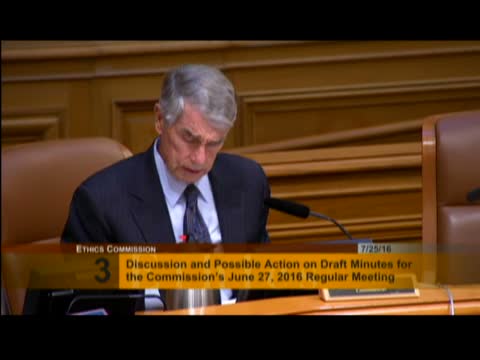
The San Francisco Ethics Commission on July 25 unanimously approved a revised "July" alternative of a proposed November ballot measure that would restrict certain lobbyist gifts, campaign contributions and bundled donations.
Staff told the commission that two draft approaches — a broader June version and a more targeted July alternative — had been circulated with supplemental memos. The July alternative narrows prohibitions so bans apply to lobbyists with a registration tie to the specific office they lobby, while using aggregation rules to reach contributions that are effectively controlled by lobbyists.
Legal counsel warned commissioners that courts have limited local regulation of independent‑expenditure committees and discussed relevant precedents, including Buckley v. Valeo and later district court rulings that affected San Francisco ordinances. Counsel said a narrowly tailored measure would be more defensible in court than a broad ban on all expenditures.
The commission's discussion focused on two persistent policy tensions: whether to ban bundling outright or to target bans to offices that a lobbyist actively lobbies, and what cooling‑off period (staff proposed 90 days) would prevent registration gaming. Several commissioners argued bundling can present acute corruption risks; legal staff cautioned that a tailored ban tied to registration and contact is easier to defend.
Members of the public and reform groups offered strong support for the July approach. Charlotte Hill of RepresentUs called the measure "an opportunity to put abuses in our past and become leaders in the fight against political corruption." Helen Grieco of California Common Cause endorsed the July alternative as more likely to withstand legal challenge. Bob Planthold of Friends of Ethics urged mandatory training tied to whistleblower protections and described instances where workers felt unable to come forward.
Speakers also pressed staff on technical drafting issues: whether to define "lobbyist firm," how to treat gifts such as travel, the role of nonprofit exceptions for informational conferences, CPI adjustments to fixed dollar thresholds, and the measure's effective date. Staff said the Jan. 1, 2018 effective date was recommended to allow time to set up registration and compliance systems but that some provisions (for example, a travel gift prohibition) might be applied earlier.
After public comment and debate, the commission voted to approve the July language and direct staff to proceed with qualifying the measure for the November ballot. Commissioners also authorized designated spokespeople and staff to attend endorsement and community meetings and to participate in the ballot simplification process.
What happens next: staff will prepare the finalized text and supporting materials for ballot qualification and participate in the ballot simplification committee and community outreach. The commission recorded the vote as unanimous among four commissioners present.