Get Full Government Meeting Transcripts, Videos, & Alerts Forever!
Get email alerts on the Proposition C topic
No spam. Unsubscribe anytime.
Community groups press Ethics Commission for clear rules on Proposition C reporting
Summary
Stakeholders urged the Ethics Commission to adopt bright'line regulations implementing Proposition C, warning the $2,500 monthly trigger and open definitions could chill small nonprofit advocacy; the city attorney warned some exemptions may require ordinance change.
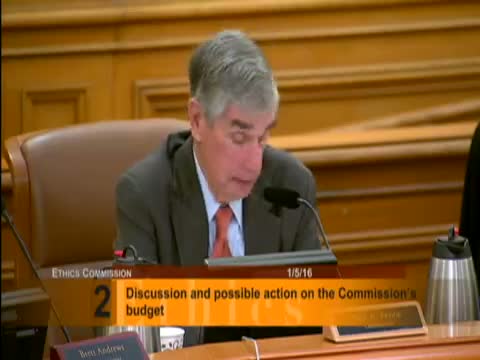
The San Francisco Ethics Commission spent a large portion of its special meeting taking public testimony and discussing an implementation plan for Proposition C, the ballot measure that reestablished expenditure lobbying disclosures.
Staff reported that an "interested persons" meeting was held on Dec.7 and a second session is scheduled; commissioners were urged to adopt interim regulations to provide guidance before enforcement begins. Chair Rennie said interim regulations will be deemed interim at the Jan.28 meeting and could be tweaked as the process proceeds.
Public commenters from unions, nonprofit networks and advocacy groups described multiple ambiguities in the measure that, they said, could impose heavy reporting burdens on small organizations or invite "gotcha" complaints. Ian Lewis of Unite Here Local 2 urged the commission to limit reporting so organizations file only in months when the $2,500 threshold is exceeded and to adopt a bright'line definition so the threshold applies to a single legislative or administrative action rather than aggregated analytic activity.
"I think you know there are many organizations that counsel individuals or people on particular cases which in aggregate might add up to $2,500 a month but I think the intent of voters when they passed this was organizations spending $2,500 to influence a single legislative or administrative action," Lewis said.
Speakers urged a range of regulatory responses: extend existing non'profit registration fee waivers to expenditure lobbyists who qualify and are non'profits; adopt the California definitions for legislative or administrative action; exempt activity under a 10% staff'time threshold; clarify fiscal'sponsor accounting; raise the $2,500 monthly threshold; and adopt a $500 nonprofit registration fee for small organizations that would otherwise face a larger charge.
Many nonprofit and community speakers described real'world examples where routine research, membership newsletters, or tenant assistance could be misread as expenditure lobbying unless the regulation draws a clear line. Jennifer Feber of the San Francisco Tenants Union described the time and cost her small group spent complying with other election rules and cautioned Prop C could produce a similar burden for organizations with limited budgets.
Commissioners and the city attorney discussed whether exemptions or raising the threshold could be done by regulation or would require an ordinance amendment. City Attorney Andrew Shen advised caution: regulations may clarify ambiguous terms but cannot change the underlying ordinance'level policy, and content'based exemptions (for particular advocacy topics) could be vulnerable to First Amendment challenge.
"Regulations are intended to clarify the scope of an ordinance, not to actually change what is supposed to be regulated versus what's not supposed to be regulated," Shen said, recommending careful drafting and recognizing the potential for legal challenge by interested parties if the commission attempts to alter ordinance scope by regulation.
Chair Rennie urged stakeholders to bring proposed regulatory language to the next interested persons meeting and directed staff to draft interim regulations that are as simple as possible to minimize burdens while preserving the measure's transparency goals. The commission set an aggressive schedule for public workshops and a Jan.28 interim regulation discussion, with the understanding that additional amendments could follow if needed.
Next steps: staff will prepare draft interim regulations for Jan.28 and convene another interested persons meeting; stakeholders were asked to submit proposed language and examples to assist with bright'line drafting.