Get Full Government Meeting Transcripts, Videos, & Alerts Forever!
Get email alerts on the Proposition C Implementation topic
No spam. Unsubscribe anytime.
Ethics Commission sets interim guidance, schedules meetings after Prop C passage as nonprofits raise concerns
Summary
Following approval of Proposition C, the Ethics Commission set a timeline for interim guidance and interested‑persons meetings before the Feb. 1, 2016 effective date after hearing nonprofit concerns about reporting burdens, outreach gaps and possible chilling effects on small organizations.
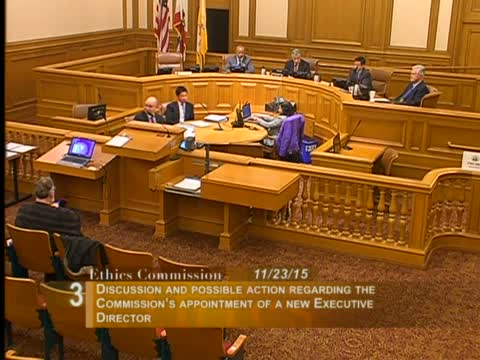
The San Francisco Ethics Commission on Nov. 23 reviewed immediate steps to implement Proposition C, which voters approved on Nov. 3, and agreed to schedule interested‑persons meetings and issue preliminary guidance because full regulations likely cannot be completed by the Feb. 1, 2016 effective date.
Acting Executive Director Jesse Menardy told the Commission staff had identified near‑term tasks including drafting necessary paper forms, preparing preliminary guidance pending formal regulations, conducting community outreach, and amending or executing the existing vendor contract with NetFile to add an electronic filing system. Menardy said based on past experience a contract amendment and a vendor build could take up to a year to execute and then another six to nine months to build a system, meaning paper filings or interim guidance would be required for the early months after the law takes effect.
Nonprofit representatives told the Commission the sector had not been adequately consulted during the measure’s drafting and raised several concerns. Larry Bush of Friends of Ethics urged the Commission to form a short committee to review the budget and consider audits to better identify staffing needs and recommended outreach to unions and nonprofits. "Give them some other options," Bush said, urging regulatory definitions that would avoid imposing burdens on grassroots member communications.
Debbie Lerman of the San Francisco Human Services Network and representatives from the Council of Community Housing Organizations and several small nonprofits warned of a "chilling effect" that could deter advocacy by small organizations and asked the Commission to hold interested‑persons meetings targeted to nonprofits and labor groups before implementation. Lerman asked the Commission to consider using the amendment process to exempt nonprofits from Proposition C in the same way they are exempted under the city's contact‑lobbyist rules.
Commissioners agreed to expand the interested‑persons list, to try to hold meetings in December and January (including at least one daytime and one evening session for nonprofit participation), and to seek to issue preliminary guidance before Feb. 1 if full regulations cannot be completed. Chair Rennie urged nonprofits to propose draft regulations where feasible to speed implementation. Staff warned that mailing‑list services used for outreach require opt‑in and that staff would proceed to invite unions and other groups to sign up for the interested‑persons list.
The Commission did not take any ordinance‑level amendments at the meeting; staff said raising registration thresholds for nonprofits would require an ordinance amendment and the Board of Supervisors' supermajority, while some narrower exemptions could be handled through regulations.