Get Full Government Meeting Transcripts, Videos, & Alerts Forever!
Get email alerts on the Annual Report topic
No spam. Unsubscribe anytime.
Ethics Commission adopts FY2014–15 annual report after public pushes for more data on Prop C and whistleblower counts
Summary
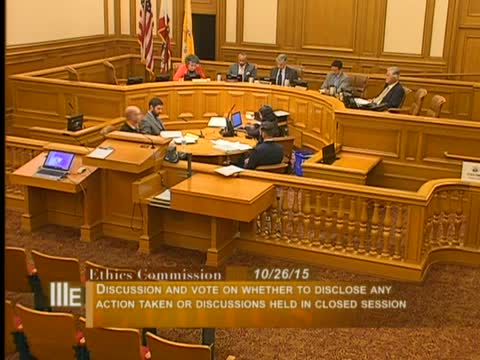
The San Francisco Ethics Commission adopted its FY2014–15 annual report on Oct. 26, 2015, after commissioners and public commenters urged clearer budget comparisons, fuller explanation of how Prop C reached the ballot and explicit reporting of whistleblower complaint outcomes.
The San Francisco Ethics Commission voted unanimously Oct. 26 to adopt its draft FY2014–15 annual report, after commissioners and public commenters pushed staff to expand the report’s factual detail and historic context. Commissioners said the document should show budget actuals versus approved amounts and provide a fuller account of the Commission’s work that led to placing Proposition C on the ballot.
Commissioner Andrews said foundational documents usually separate past-year reporting from forward-looking plans and suggested the report show ‘approved’ budget figures alongside actual expenditures to make performance transparent. Commissioner Keane and the chair requested that the paragraph describing Proposition C be expanded to record the sequence of meetings, interested‑persons hearings and the unanimous vote that placed the expenditure‑lobbyist measure on the Nov. 3 ballot.
Several public commenters urged more quantitative detail. Charlie Martsteller of Friends of Ethics asked the Commission to include enforcement totals and specifically called attention to a $191,000 decision that he said should be reflected in fines totals. David Pilpel recommended more charts and consistent program-level statistics (numbers of filings, amounts assessed and collected) so readers can track trends across years. Former Commissioner Eileen Hanson and other commenters requested that the draft return for additional public comment after staff incorporate recommended changes.
Acting Executive Director Menardi said the draft strikes a balance between historical reporting and items that appear on the work plan; the commission adopted the report subject to amendments proposed by commissioners and left final language to the chair’s approval. The motion to adopt carried unanimously.
The vote follows public concern about whistleblower retaliation reporting. Whistleblower advocate Derek Kerr had urged the Commission during public comment earlier in the meeting to add a specific line in the annual report that shows how many retaliation complaints were substantiated. Kerr said the civil grand jury had highlighted the issue and that repeated zeros for substantiated retaliation claims should trigger review. Commissioners and public commenters agreed more clarity about whistleblower investigations and the statistics behind enforcement outcomes would be useful for public accountability.
The adopted approach will permit staff to revise the draft to include clearer budget comparisons, a fuller chronology of the Prop C process and additional enforcement and complaint‑tracking data; the chair will review the final language before publication. The commission also agreed publicly to post settlement documents and other final enforcement items to the commission website when permitted.