Get Full Government Meeting Transcripts, Videos, & Alerts Forever!
Get email alerts on the Enforcement topic
No spam. Unsubscribe anytime.
Commission approves two settlement agreements, discusses long enforcement timelines ahead of elections
Summary
After a closed session on five complaints, the commission announced approval of two settlement agreements and discussed concerns that enforcement timelines can be too slow to affect elections, proposing review of procedures for complaints filed within 60 days of an election.
The commission concluded a closed‑session review of five complaints and announced two approved settlement agreements, and commissioners spent substantial time considering whether enforcement procedures can be accelerated for complaints that arise close to an election.
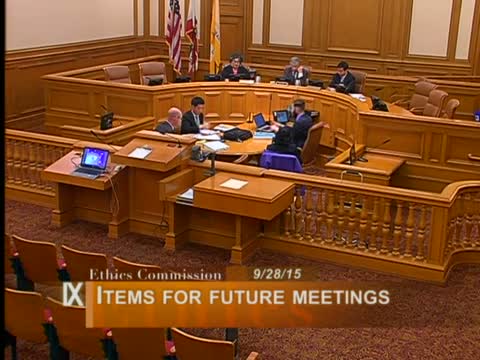
Chair Rennie moved that the meeting go into closed session to discuss five complaints; the commission voted to move into closed session. After returning to open session, Commissioner 2 moved that deliberations remain undisclosed and the commission voted in favor. Chair Rennie then announced, "the commission approved a settlement of ethics complaint number 13‑100730" and that the settlement agreement will be posted on the commission’s website; he also announced approval of a settlement relating to complaint 26‑101021.
Commissioners and public commenters raised concerns about the length of the enforcement process and its effects on elections. Several speakers argued that when complaints relate to events within about 60 days of an election, the commission’s ordinary timeline can make it impossible to resolve matters before voters cast ballots. "It's a long time to go without a resolution of these questions," Larry Bush (Friends of Ethics) said about an older matter involving Lynette Sweet, which he said had been pending for years and had implications across multiple elections.
Chair Rennie suggested putting the issue on a future agenda to explore whether there are legally permissible mechanisms—consistent with charter and ordinance constraints—to prioritize or accelerate certain pre‑election complaints. Commissioners noted legal limits set by the charter and by ordinance and referenced the Fair Political Practices Commission (FPPC) as a peer agency that sometimes accelerates investigations tied to elections.
No change to enforcement law was adopted at the meeting. Commissioners directed staff to include the topic on a future agenda, examine what other agencies have done and report back on legal constraints and possible procedural options to address timing concerns.
The commission also accepted the August 2015 draft meeting minutes (approved unanimously earlier in the meeting) and adjourned.