Get Full Government Meeting Transcripts, Videos, & Alerts Forever!
Get email alerts on the Enforcement Policy topic
No spam. Unsubscribe anytime.
Ethics Commission approves staff discretion to propose warning letters for technical disclaimer errors
Summary
The commission unanimously adopted a staff recommendation allowing staff to propose warning letters (rather than automatic fines) for limited, non‑intentional disclaimer violations during a transition after new disclaimer rules took effect; the commission retains authority to require fines for serious or repeated violations.
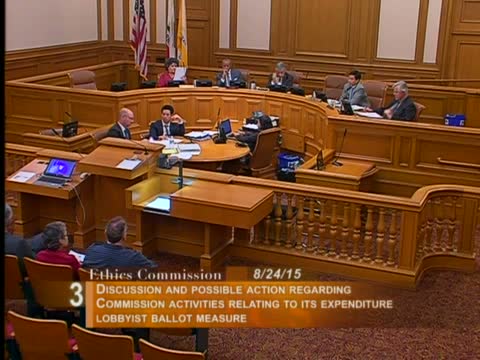
At its Aug. 24 session, the San Francisco Ethics Commission voted unanimously to permit staff, in some cases, to propose a warning letter settlement rather than pursue automatic fines for technical campaign disclaimer violations while the commission updates enforcement policies.
Deputy Director Justin Menardi explained that new disclaimer rules (effective at the end of July) require additional information on paid‑for lines, including a referral to the Ethics Commission website. Because the rules are new and some respondents appear confused, staff proposed exercising discretion for first‑time or minor, non‑intentional errors (for example, small font deviations or an omitted website reference) and offering a warning letter rather than immediately imposing fixed fines. Menardi said the commission would retain final approval; staff would present a proposed warning letter to the commission before sending it.
Menardi described the policy context: the commission's earlier adopted penalty schedules call for minimum fines (the policy referenced fines beginning at $500 and actual policy language called for larger amounts in some cases), but staff believes a warning regime would prevent undue hardship on new or small campaigns while reserving fines for mass mailers or blatant, longstanding violations. Commissioners asked for clarity on how proposed warning letters would map onto existing timelines and policies and requested that staff prepare clear guidance and a project calendar.
A motion to adopt the staff proposal was made and seconded; commissioners voted in the affirmative. The motion carried unanimously and staff recommendation was adopted.
Next steps identified at the meeting included updating policies and regulations to reflect the changed disclaimer code sections, preparing written guidance and charts for outreach to campaigns, and presenting proposed warning letters to the commission for approval before issuance.