Get Full Government Meeting Transcripts, Videos, & Alerts Forever!
Get email alerts on the Campaign Finance Reform topic
No spam. Unsubscribe anytime.
Ethics Commission directs staff to draft multiple campaign-finance reforms and build a legal record, with ballot option considered
Summary
The commission agreed to begin drafting language and hold interested-persons meetings on a package of possible amendments to the Campaign Finance Reform Ordinance, including applying city contribution limits to candidate-controlled committees, expanding bundling/fundraising disclosure, considering a public-benefit contribution ban and debarment penalties, and moving slate-mailer filings to the Ethics Commission; several staff-directed motions passed.
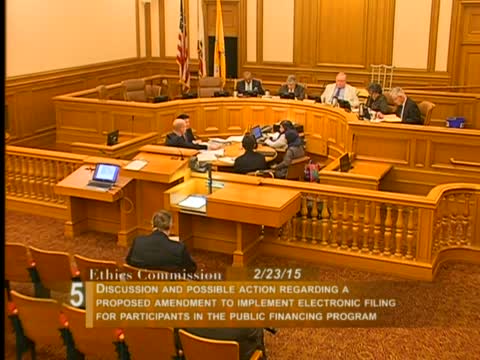
At its Feb. 23 meeting the San Francisco Ethics Commission directed staff to draft and advance multiple potential amendments to the city's Campaign Finance Reform Ordinance (CFRO/CFRA) and to begin building a legislative and evidentiary record to support any limits or bans. Deputy Director Jesse Menardy presented six possible reforms and asked commissioners which to prioritize.
Key ideas included applying San Francisco's candidate contribution limits and bans to candidate-controlled ballot-measure and general-purpose committees; expanding reporting or disclosure requirements for individuals who bundle or fundraise on behalf of candidates (broadening the current lobbyist-focused rules); enhancing private rights of action by allowing a portion of penalties to go to successful private plaintiffs (as in Los Angeles); reenacting broader Propositions-style public-benefit contribution bans (reviving parts of former Proposition J that were repealed by Proposition E); adding debarment as a penalty for serious campaign-finance violations by contractors; and requiring slate-mailer organizations to file copies of their state filings with the Ethics Commission so local activity is easier to find.
Commissioners and members of the public debated constitutional concerns and precedent (one public commenter, attorney Anita Mayo, noted U.S. Supreme Court precedent on limits to ballot-measure committees and urged caution), the need to build a factual record showing corruption or the appearance of corruption, and process questions about whether measures should be forwarded to the Board of Supervisors or placed directly on the ballot by the commission. The city attorney's office advised that the commission could place measures directly on the ballot but that the commission should assemble legislative findings demonstrating the corruption or appearance-of-corruption interest necessary to justify new limits.
Actions taken: the commission voted to direct staff to hold interested-persons meetings and build a record regarding applying city contribution limits to candidate-controlled committees, with commissioners indicating willingness to consider placing a measure before voters. The commission also directed staff to draft language on bundling/fundraising reporting obligations (with an eye to thresholds and whether candidates or bundlers should report), to return with language addressing public-benefit contribution limits and to research debarment as a penalty, and to require slate-mailer filings to be submitted to the Ethics Commission for local access. Several of these staff direction motions were moved and seconded during the meeting and carried on voice votes; commissioners emphasized doing the legal homework to avoid foreseeable constitutional challenges.
The commission voted to proceed with interested-persons meetings and to return to the commission with draft language and a regulatory calendar in March. No final ordinance changes were adopted at the meeting; the outcome was a set of staff directives to develop draft proposals and records for further hearings.