Get Full Government Meeting Transcripts, Videos, & Alerts Forever!
Get email alerts on the Sunshine Ordinance topic
No spam. Unsubscribe anytime.
Public presses Ethics Commission for openness as it moves into closed session on Grossman appeal
Summary
Public commenters repeatedly accused staff of withholding documents and advised the commission to handle Sunshine Ordinance policy in open session; commissioners debated whether to receive a non‑legal status update publicly but ultimately went into consolidated closed session and later voted not to disclose deliberations in Grossman v. Saint Croix.
A recurring theme of the San Francisco Ethics Commission’s June 23 meeting was public demand for transparency and fuller agenda descriptions in cases involving the Sunshine Ordinance and public‑records access.
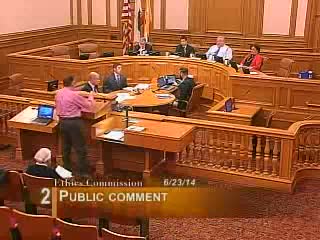
Multiple speakers — including Rayharts, Director of San Francisco Open Government, former Sunshine Task Force chair Hope Johnson, and several private citizens — told the commission they were frustrated by vague agenda descriptions for anticipated litigation items and by what they described as a pattern of withholding documents the public should see. Commenters asserted the commission and its executive director, Saint Croix, have on multiple occasions not provided documents to members of the public and have scheduled hearings without adequate notice for interested parties.
Speakers cited the Sunshine Ordinance and the Brown Act and urged commissioners either to provide more specific agenda descriptions so affected people can decide whether to attend or to hold otherwise public policy discussions in open session. Hope Johnson pressed the commission to hear item 6 (policies regarding Sunshine Ordinance enforcement and the narrow attorney‑client privilege exception) in open session so that policy interpretation would be part of the public record.
Commissioners and counsel discussed legal constraints. Deputy City Attorney Josh White advised that certain agenda items (items 4 and 5) involve matters that require closed‑session handling (probable cause and settlement discussions) under the charter and commission regulations; item 6, which relates to pending litigation (Grossman v. Saint Croix), could be subject to some discretion but counsel said it would be difficult to provide full advice on pending litigation in open session. Commissioners considered three options: provide a staff background in open session and then go into closed session for legal advice, hold a public hearing, or waive attorney‑client privilege (the chair opposed waiving privilege for active litigation).
After public comment and discussion the commission conducted a consolidated closed session for items 4–6. When the commission returned to open session it announced the stipulation in item 4 and probable‑cause findings in item 5, and it said it would not disclose closed‑session deliberations relating to item 6; the commission confirmed it had sought City Attorney advice in closed session. Chair Herr also apologized on the record to Hope Johnson for an earlier exchange during public comment in which Johnson said she had not completed her remarks.
Public commenters pressed for better minutes and fuller public‑comment summaries and urged the commission to use more specific agenda descriptions so members of the public and parties to litigation can know whether their interests are implicated. Commissioners agreed to examine candidate‑guide materials and whether agenda descriptions can provide additional, non‑privileged detail.