Get Full Government Meeting Transcripts, Videos, & Alerts Forever!
Get email alerts on the Lobbying Ordinance topic
No spam. Unsubscribe anytime.
Ethics Commission briefed on Board‑passed lobbying ordinance changes, staff to draft implementation rules
Summary
Deputy Executive Director Jesse Menardi outlined amendments the Board of Supervisors passed June 17 that lower the lobbyist qualification threshold to a 1‑contact test for clients (and a 5‑contact monthly test for employer lobbying), add quarterly reporting for permit expediters and new developer donation disclosures; commissioners pressed staff on outreach, training and expected administrative costs.
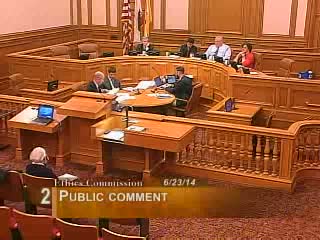
The San Francisco Ethics Commission on June 23 received a staff briefing on amendments to the city’s lobbying ordinance that the Board of Supervisors passed June 17 and that are slated for implementation later this year.
Jesse Menardi, deputy executive director, told commissioners the most significant substantive change is the qualification threshold: the new ordinance establishes a one‑contact threshold for paid lobbyists acting on behalf of a client and a five‑contacts‑or‑more‑in‑a‑calendar‑month test for individuals lobbying on behalf of an employer (for example, an in‑house government‑affairs director). Menardi said the change was intended to create a clearer, more enforceable bright‑line test compared with the prior earnings‑based threshold.
Menardi also described related provisions: a new quarterly reporting requirement for so‑called permit expediters who assist applicants at the Department of Building Inspection; a developer‑disclosure rule that requires disclosure of donations of $5,000 or more to nonprofits if individuals from those nonprofits lobby on behalf of a developer’s project; and an updated training requirement that will require lobbyists to certify completion of online training within a year.
Commissioners asked how the Ethics Commission will notify the regulated community and the public. Menardi said staff is drafting implementing regulations and expects those rules to come to the commission at its July meeting; the commission will revise its lobbyist manual and update the online lobbyist training. He said the permit‑expediter reporting requirement goes into effect January 1, 2015, and that implementation will require some contract changes to the online filing vendor, which will have budget and staff‑time implications.
Commissioners and staff discussed enforcement workload and audits. Menardi said the number of registered lobbyists is expected to rise under the new threshold, creating additional administration and likely greater staff time for registration, compliance checks and audits; the program currently requires at least one audit per year but Menardi and commissioners agreed the commission will calibrate the number of audits based on staff capacity and the number of registrants.
Public commenters urged the commission to review aspects of the ordinance rather than passively implement it. Rayharts, Director of San Francisco Open Government, warned that exemptions for in‑house lobbyists or nonprofits could reduce transparency and said a low audit minimum would be insufficient; Anita Mayo (Pillsbury Winthrop) urged robust outreach to lobbyists, developers and others affected by the rule changes.
The commission did not take formal rulemaking votes at the June 23 meeting but directed staff to develop regulations, outreach materials and training updates for upcoming meetings. Implementation details, including audit frequency and vendor contract amendments, will be considered as staff returns with proposed regulations and budget estimates.