Get Full Government Meeting Transcripts, Videos, & Alerts Forever!
Get email alerts on the Ethics Settlement topic
No spam. Unsubscribe anytime.
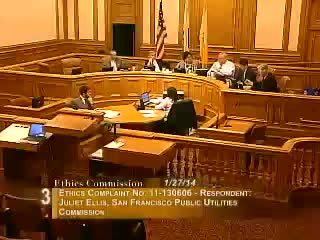
Ethics Commission adopts joint settlement with FPPC against SFPUC employee; penalties and repayment ordered
Summary
The San Francisco Ethics Commission voted to approve a joint settlement with the Fair Political Practices Commission finding multiple conflict-of-interest violations by an SFPUC employee; the settlement includes a state penalty of $3,500, $5,000 in local fines and repayment of roughly $17,000 in salary, and drew public criticism over investigative thoroughness.
The San Francisco Ethics Commission on its January agenda voted to adopt a joint stipulation with the Fair Political Practices Commission finding that an employee of the San Francisco Public Utilities Commission violated state and local conflict‑of‑interest rules.
City staff told commissioners the FPPC’s portion of the settlement carries a $3,500 penalty under Government Code section 87100 and the Ethics Commission’s local counts include two penalties of $2,500 each, for a local total of $5,000. Staff also reported the respondent repaid approximately $17,000 in salary paid during the period at issue; staff described the grand total of penalties and repayments connected with the matter as $8,500 for the settlement sums the Ethics Commission was addressing.
The document presented to the commission was a stipulation agreed to by the respondent and the enforcement agencies. Staff and the city attorney explained that, because the FPPC had already publicly deliberated and accepted its portion, the joint settlement could be discussed in open session; ordinarily, similar matters would be handled in closed session while investigations remain confidential under the San Francisco Charter.
Commissioners asked detailed questions about the underlying facts, including whether Green For All or the PUC terminated the contract referenced in the stipulation and how staff assessed intent. Staff said Green For All had returned the contested payments and that interview evidence and the absence of contrary documentary evidence led staff to conclude there was no credible evidence of deliberate concealment — a determination the commissioners debated.
Public commenters included a longtime whistleblower who said the commission’s investigations are often superficial and urged stronger action, while other community leaders — notably Dr. Sandra Hernandez — urged the commission to accept staff recommendations and described the employee as a dedicated public servant. Commissioners acknowledged those differing public views during deliberations.
A motion to adopt the findings and the stipulation was moved by Commissioner Keane and seconded; the motion passed with three votes in favor and two opposed (Commissioners Rennie and Andrews opposed). The commission approved the stipulation and said it would communicate the action appropriately with the FPPC.
The commission record notes the limits of its authority: it does not have statutory power to remove or unilaterally terminate a non‑elected employee; commissioners discussed but did not adopt any separate recommendation to the SFPUC about employment status, noting such follow-up would require a separate agenda item.