Get Full Government Meeting Transcripts, Videos, & Alerts Forever!
Get email alerts on the Ethics Waiver topic
No spam. Unsubscribe anytime.
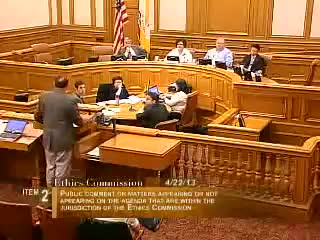
Ethics Commission grants waiver allowing architect Jonathan Perlman to serve on Historic Preservation Commission
Summary
The San Francisco Ethics Commission voted to grant a waiver to architect Jonathan Perlman from Campaigning Governmental Conduct Code section 3.224, allowing him to serve in Seat 3 on the Historic Preservation Commission despite potential conflicts arising from his San Francisco–based projects.
Jonathan Perlman, a practicing architect appointed to Seat 3 (architectural historian) on the Historic Preservation Commission, was granted a waiver by the San Francisco Ethics Commission that clears him to continue serving despite potential conflicts with local planning and building staff. Perlman told the commission he runs a small firm that recently grew to four employees and that about 70% of his work involves San Francisco projects. He said recusal would be his practice when his own projects appear and that he would arrange for others — attorneys, clients or colleagues — to present projects before other bodies when necessary.
"If I wasn't granted this waiver, I probably would not be able to serve on the commission," Perlman said, describing the difficulty a small-practice architect faces serving while also maintaining a local workload. He told commissioners he had two projects in recent years that reached the Historic Preservation Commission and one scheduled at the Planning Commission, and that most of his work is handled administratively by planning and building staff.
Nicole Wheaton, the Mayor's appointment secretary, told commissioners the mayor's office vetted roughly 25–30 candidates for four vacancies and narrowed the pool for this seat to three finalists; she said Perlman's qualifications and preservation philosophy aligned with the mayor's priorities and that the Board of Supervisors had unanimously approved the appointment about a month earlier.
Public commenter David Pilpel supported the waiver while noting it would have been preferable to file the waiver request earlier in the appointment process. Commissioners questioned whether granting waivers risks the appearance of favoritism but several said denying the waiver could exclude small-business owners from service. After discussion and public comment, a motion to grant the waiver was moved and seconded, and the commission voted to approve it. The chair announced: "You've been granted your waiver, Mister Perlman."