Get Full Government Meeting Transcripts, Videos, & Alerts Forever!
Get email alerts on the Sunshine Ordinance And Whistleblower Access topic
No spam. Unsubscribe anytime.
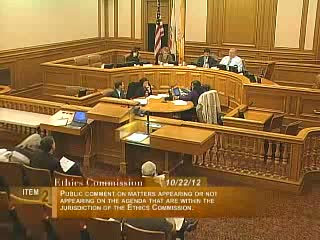
San Francisco Ethics Commission finds investigatory files protected, directs outside review of interagency correspondence
Summary
After hours of public comment and legal debate, the Ethics Commission voted to find no willful violation of Sunshine‑ordinance confidentiality for investigatory files but directed a contracted reviewer from San Jose to re‑check correspondence between the Ethics Commission and the City Controller for non‑privileged documents.
The San Francisco Ethics Commission voted Monday to find that investigatory files connected to two recent whistleblower‑related referrals were protected from public disclosure, but it directed an outside reviewer to examine correspondence between the Ethics Commission and the City Controller’s Office to determine whether any non‑privileged documents should be released.
The action came after more than two hours of public comment and legal argument over whether the Commission could or should send the entire adjudication of complaints involving Executive Director John St. Croix to another jurisdiction. Patrick Monette Shaw, the complainant in one case, urged the Commission to transfer the matters in their entirety because of perceived conflicts of interest; Shaw said he believed that the Commission’s reliance on Charter section C3.699‑13 and other exemptions was mistaken. "699‑13 only applies to ethics laws, not to public records access laws," Shaw said during public comment.
San Jose staffer Lisa Harrick, who reviewed the Sunshine Task Force referral at the Commission’s request, told commissioners that while outside bodies commonly do investigative work, the City Charter and the Commission’s procedures typically reserve final adjudication to the San Francisco Ethics Commission. Harrick also outlined state statutes and Government Code provisions that can protect investigatory files and whistleblower complaints, and she recommended a document‑by‑document approach where feasible.
Commissioners and counsel debated the practical and legal consequences of disclosure. Controller’s Office staff argued that whistleblower files and investigative materials are routinely kept confidential in part to protect potential witnesses and complainants from retaliation. Ray Hartz of San Francisco Open Government and several public commenters pushed back, arguing that the public’s right of access had been narrowed improperly and urging the Commission to produce at least redacted records of correspondence and closing memoranda.
After deliberation, the Commission approved a motion finding no willful violation of the Sunshine Ordinance with respect to the investigatory files held by the Ethics Commission and the City Controller. The motion carved out correspondence exchanged between the two offices; the Commission directed Lisa Harrick to review that subset of communications and report back on whether any specific items are not privileged and should be disclosed. The motion passed on a voice vote.
Chair: "There is an important need to keep investigatory files confidential," the Chair said in explaining the vote, adding that protecting potential whistleblowers helps preserve future cooperation with investigations.
Shaw criticized the outcome, saying the public deserves access to the records that show how referrals were handled and why certain materials were withheld. Lisa Harrick agreed to review the correspondence and return to the Commission with a report identifying any non‑privileged materials.
The Commission also deferred consideration of proposed CFRO amendments until a fuller panel is present and adopted its annual report with requested amendments to clarify budget and whistleblower reporting. The meeting ended after a final round of public comment and a motion to adjourn.
Next steps: Ms. Harrick will review the carved‑out correspondence and report to the Commission; if she identifies documents that are not privileged, the Commission said it would schedule a follow‑up hearing to consider whether any failure to disclose was willful and whether further action is warranted.