Get Full Government Meeting Transcripts, Videos, & Alerts Forever!
Get email alerts on the Sunshine Regulations topic
No spam. Unsubscribe anytime.
Ethics Commission adopts new rules for handling Sunshine Ordinance Task Force referrals
Summary
The San Francisco Ethics Commission voted to adopt comprehensive regulations governing how it will process referrals from the Sunshine Ordinance Task Force, including definitions, hearing procedures, public-notice rules and an attendance requirement for hearings; the rules were adopted as Decision 0.8 after amendments.
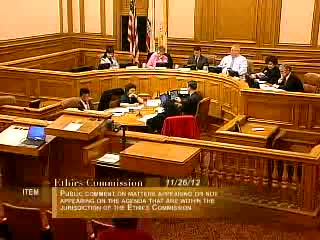
The San Francisco Ethics Commission voted to adopt new regulations governing how it will process referrals from the Sunshine Ordinance Task Force, the body that investigates alleged violations of the city—s Sunshine Ordinance. The commission approved the rules as Decision 0.8 after amending several sections at Monday—s meeting.
The changes clarify definitions (Decision 0.1), establish procedures for referrals and show-cause hearings (Decision 0.2 and 0.3), and set requirements for orders and public announcements. Executive Director St. Croix told commissioners staff had distilled feedback from the task force into eight decision points for the commission to resolve; commissioners took those points one at a time before voting to adopt the package as amended.
A central point of debate was whether the Supervisor of Records should be included in the definition of a "referral." Public commenter David Pilpel argued the Supervisor of Records lacks authority under the ordinance to make a referral and urged removing that office from the definition. Staff and counsel responded that while the supervisor is not statutorily required to refer matters, the office could, in practice, direct matters to the commission; leaving a permissive reference preserves the Commission—s ability to act if such a referral is received.
Commissioners also discussed how findings of fact and conclusions of law should be recorded and released. Commissioners agreed the commission can make oral findings during hearings and instruct staff to prepare a written order when appropriate; the written order will be publicly available and the commission discussed linking to full orders in electronic announcements to aid public access.
To reduce the risk that a single commissioner or a small minority would determine outcomes in contested hearings, the commission added an attendance requirement: scheduled hearings must have at least four commissioners present or the hearing must be continued to the next meeting. The commission also adopted certification language (drawn from the existing enforcement regulations) requiring a commissioner who did not attend an entire hearing to certify on the record that they reviewed the record before participating in a subsequent decision.
Richard Nee, a member of the Sunshine Ordinance Task Force, asked the commission to delay final action to give five recently appointed task force members time to familiarize themselves with the proposals. Commissioners acknowledged the new members but, given the longstanding process and extensive prior input, moved to adopt the rules while agreeing to revisit implementation and solicit feedback following practical experience.
The motion to adopt the Sunshine Ordinance regulations as amended (Decision 0.8) carried on a voice vote. Commissioners said staff should track how the rules operate in practice and return with recommended refinements after experience with hearings.