Get Full Government Meeting Transcripts, Videos, & Alerts Forever!
Get email alerts on the Campaign Finance E Filing topic
No spam. Unsubscribe anytime.
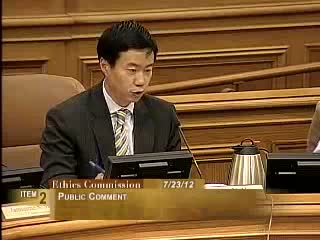
Ethics Commission approves electronic filing for local campaign committees, keeps protections for small filers
Summary
The San Francisco Ethics Commission approved amendments to the Campaign Finance Reform Ordinance that allow local committees to submit campaign statements electronically as the official record, preserve a voluntary option for very small filers, and commit to immediate public posting of e-filed documents; commissioners voted to adopt the package unanimously by voice vote.
The San Francisco Ethics Commission voted to adopt changes to the Campaign Finance Reform Ordinance that permit local campaign committees to file statements electronically as the official record and reduce duplicate paper requirements.
Staff information-technology officer Steven Massey told the commission the change follows state legislation (AB 2452) that allows local agencies to eliminate paper filing and make electronic submissions the official documents of record. He said the proposed amendment to CFRA section 1.112 would consolidate filings so local committees submit one electronic copy rather than separate paper duplicates.
Commissioners flagged public benefit and accessibility as central to the change. Commissioner Sudley said the proposal would give the public more integrated, usable information and asked whether small filers could voluntarily file electronically; Massey confirmed that the draft adds a voluntary-electronic filing option in a new section 1.112(c), letting filers who are not required to provide detailed itemization opt into e-filing and avoid paper copies.
Public commenters raised usability and transparency concerns. A treasurer of a small club described Schedule D in the state electronic format as ‘‘laborious’’ and urged either program fixes or continued allowance of paper Schedule D submissions for small organizations. Oliver Luby and others recommended staff create an Excel-based submission option for some contract-disclosure forms to reduce manual scanning and improve enforcement workflows.
Ray Hartz, director of San Francisco Open Government, pressed staff on public access timelines and whether the system would post documents immediately. Massey and staff said that electronically filed documents become available within seconds of submission and that no intervening staff action is required to make them accessible to the public.
After discussion, a commissioner moved and another seconded adoption of decision points 1 through 5 for the CFRA amendments (including two small amendments to decision 0.1). The commission approved the motion by voice vote with no recorded opposition.
What happens next: The ordinance changes adopted by the commission will also be considered by the Board of Supervisors, and staff noted some findings in the ordinance are required by state law to accompany the local action. Staff said technical Schedule D improvements are planned but not expected to be deployed until early next year.
Vote at a glance: The motion to adopt CFRA decision points 1–5 (including the two amendments to decision 0.1 and adoption of decision 0.6 in a follow-up motion) passed by voice vote; no roll-call tally was recorded in the transcript.
Sources: Commission staff presentation and public comment at the Ethics Commission meeting.