Get Full Government Meeting Transcripts, Videos, & Alerts Forever!
Get email alerts on the Official Misconduct Charges topic
No spam. Unsubscribe anytime.
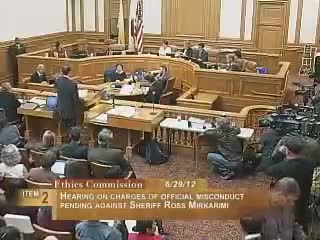
Mayor Lee says sheriff's guilty plea and court record prompted official-misconduct charges; expert warns of trust and prosecutorial risk
Summary
At a San Francisco commission hearing, Mayor Lee testified he relied on Sheriff Mark Mercarini's guilty plea and court record to bring official-misconduct charges, and retired Chief Lansdowne, testifying as the mayor's expert, said a sheriff's conviction can damage interagency trust and create Brady-list risks for prosecutions.
Mayor London N. Lee told a San Francisco commission that he relied principally on the criminal court record and the sheriff's guilty plea when he filed charges alleging official misconduct against Sheriff Mark Mercarini. "I did meet with the sheriff," Lee said, and later explained he had "waited for the whole criminal prosecution to complete itself" before reviewing the record and deciding to charge.
The mayor confirmed on cross-examination that he had told reporters he believed the sheriff "beat his wife," and said the basis for that public statement was the court records and Mercarini's admission of guilt. "Primarily his plea to that charge, and the acceptance of the sentencing that goes with it," Lee said when asked what convinced him the sheriff had committed the offense at issue.
Under questioning, Lee said he had met with the sheriff in his office, asked him to resign and gave him a short period to consider that option; when Mercarini declined, the mayor concluded the sheriff's conduct amounted to official misconduct. Lee also said he suspended the sheriff without pay because the city could not pay an employee not permitted to work.
Retired police chief and expert witness Michael Lansdowne testified for the mayor about professional standards for law enforcement executives. Lansdowne said chiefs and sheriffs should meet "a higher standard" than other public employees and that a conviction for a crime such as domestic violence would make a sheriff "unfit to hold the office." He warned that a sheriff's conviction can place that person on Brady lists, which defense lawyers and prosecutors must disclose in advance of trial and which "never goes away," potentially complicating any case in which the sheriff would be a witness.
Lansdowne also addressed evidence-handling issues raised during questioning, saying protective orders directing the surrender of firearms are typically directed to the investigating agency to retain control of evidence. He said investigators sometimes learn more about a case from seized items and that the investigating agency usually retains custody.
Counsel for the sheriff objected at times to certain lines of questioning and to the commission's consideration of some matters, including whether the mayor's internal consultations were protected by deliberative-process considerations. Commissioners pressed both the mayor and Lansdowne about the standard the panel should apply when determining whether conduct "falls below the standard of decency, good faith and right action" in the charter and whether that standard must be tied to a public officer's duties.
The commission set scheduling for remaining witnesses, including Miss Haines and Miss Lopez on July 18, discussed whether former Sheriff Hennessy would appear, and directed the parties to identify which paragraphs of the amended written charges are disputed. The commission gave the parties until August 10 to file supporting evidence for disputed facts and any legal briefs on unsettled legal questions. The panel voted to approve its interim rulings from the hearing and adjourned.
No final determination on the charges was made; the commission said it would receive submissions and reconvene to deliberate and make its recommendations to the Board of Supervisors.