Get Full Government Meeting Transcripts, Videos, & Alerts Forever!
Get email alerts on the Public Comment topic
No spam. Unsubscribe anytime.
Public comment at Ethics Commission meeting overwhelmingly urged dismissal or speedy resolution in sheriff’s case
Summary
More than two dozen members of the public spoke during the Ethics Commission’s special meeting, with many urging dismissal of charges against Sheriff Ross Mirkarimi, criticizing the mayor and media coverage, and calling for a swift resolution so the sheriff can return to duty.
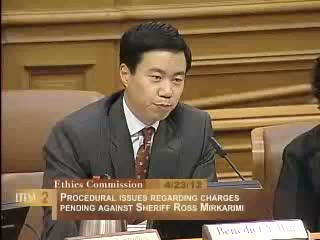
Public comment filled the final portion of the San Francisco Ethics Commission’s special meeting, and the speakers who addressed the commission largely urged dismissal of the official‑misconduct charges against Sheriff Ross Mirkarimi or called for a rapid resolution.
Commission staff limited speakers to two minutes each and emphasized that public comment would not be treated as evidentiary material for the adjudication. Dozens of residents, clergy and community organizers took the podium. Common themes included complaints of unequal enforcement by the commission in past cases, character‑assassination claims against the sheriff, and appeals for the sheriff’s reinstatement or restoration of pay.
Speakers who identified themselves by name included Patrick Manette Shaw, who said the commission had “cherry‑picked” cases in the past; Ernestine Waters Weiss, who described the matter as “nonsense” and urged dismissal because, she said, the conduct occurred before the sheriff assumed office; and multiple community leaders and clergy who highlighted the sheriff’s community work and argued the investigation was politically motivated. Several callers requested that Ileana Lopez, the wife whose videotaped statement is part of the record, be made available to testify live or via satellite so the commission could hear directly from her.
Other speakers urged procedural fairness: David Pilpel asked that the commission post documents received from both sides on the commission website and maintain a public file; commenters raised concerns about prior cases the commission handled without hearings; and at least one domestic‑violence expert cautioned commissioners that victims and potential future victims were watching the process and urged care.
The commission listened to public comment after the attorneys’ procedural arguments and then returned to procedural matters, adopting a briefing and disclosure schedule the parties had negotiated. The chair reiterated that public comment is not evidence in the adjudicative record.