Get Full Government Meeting Transcripts, Videos, & Alerts Forever!
Get email alerts on the Public Comment Enforcement topic
No spam. Unsubscribe anytime.
Public commenters urge swifter enforcement after years of dismissed Sunshine complaints
Summary
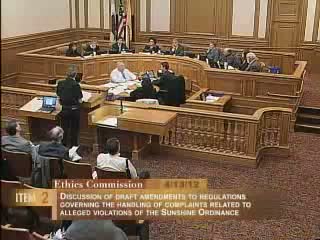
Multiple public speakers at the joint meeting urged the Ethics Commission and Sunshine Ordinance Task Force to expedite hearings and adopt stronger enforcement, citing past dismissals, a civil grand jury report, and case examples where complainants say orders were not enforced.
Public comment at the joint meeting focused on perceived failures in enforcement and urged the Ethics Commission to take faster, more effective action to secure public records and open meetings rights.
Patrick Manette Shaw read parts of the task force’s April 3 memo and said the task force’s primary concern was that the staff draft “had so drastically restricted the commission's enforcement jurisdiction as to render it…non‑enforcement nonexistent.” Peter Warfield, who said his library records case was dismissed after the task force’s finding, told the meeting he received little follow‑up from the Ethics Commission. Other public speakers described long delays, referenced a civil grand jury report, and recommended a two‑tier enforcement approach (administrative sanctions for routine noncompliance; more serious penalties or removal for misconduct).
Speakers and several commissioners noted data the task force provided: “Between 2005 and February, there were 35 cases. It's approximately 5 a year,” Patrick Manette Shaw said, indicating steady referral volume but also long delays in some adjudications. Public commenters asked the commission to schedule pending willful‑failure hearings (including complaints they said implicate St. Croix and the city controller) and to ensure recusal where conflicts may exist.
The meeting record shows commissioners and staff acknowledged public frustration and expressed intent to revise regulations and procedures. Staff and the commission emphasized that formal changes to regulations will follow public notice and a formal vote.
The public‑comment period underscored the political and emotional stakes of the rulemaking: speakers repeatedly framed enforcement as essential to citizens’ ability to petition government and to participate in open government.
The commission adjourned with no immediate votes; staff will return with redrafted regulations or a memo for a future public rulemaking meeting.