Get Full Government Meeting Transcripts, Videos, & Alerts Forever!
Get email alerts on the Operations Incidents topic
No spam. Unsubscribe anytime.
Operations report: Eureka Street greater-alarm, tactical medics and growing cliff/surf rescues prompt planning talks
Summary
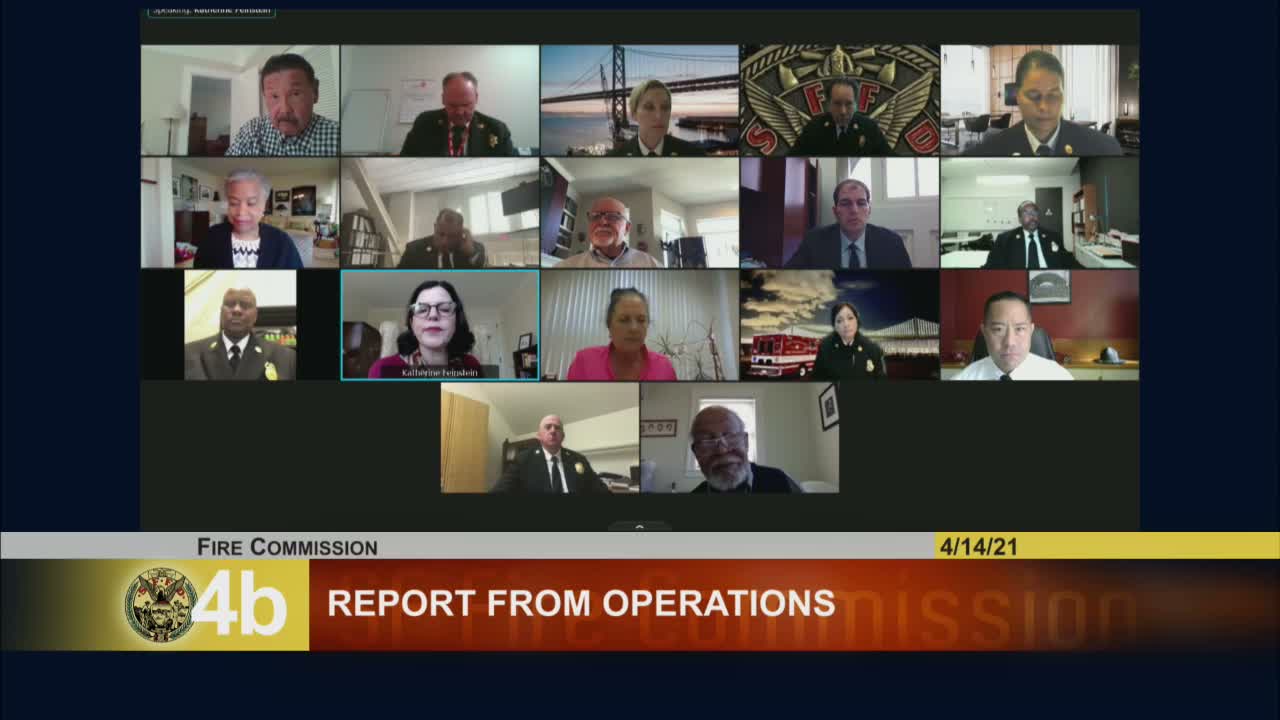
Deputy Chief Brian Rubinstein briefed the commission on April 14 about operational activity including rescues, a complex Eureka Street greater-alarm fire and the role of tactical medics; commissioners pressed for cost figures and a possible marine rescue unit as surf/cliff rescues rise.
Deputy Chief Brian Rubinstein told the Fire Commission on April 14 that April brought multiple challenging incidents and sustained operational tempo, including cliff and surf rescues, mutual-aid preparations for the wildland season and a complex greater-alarm fire on Eureka Street that required coordinated response with police.
Rubinstein described outreach and training during tsunami‑preparedness week, vaccine-site support and new para‑medicine trainees for the Street Crisis Response Team. He reviewed a Eureka Street incident that the department classified as a greater-alarm fire and said police and tactical paramedics were involved because the scene included a dangerous individual; he told commissioners the arson investigation remains active and will be released after investigators complete their work.
Commissioners asked about the rising number of water rescues — one commissioner said there were “about 20 or 21” surf or cliff rescues in March — and whether the department should create a dedicated marine rescue unit. Chief Nicholson and CFO Mark Corso said the department has discussed options and that staffing alone for a unit comparable to an engine company would be roughly $2.5–3 million annually; Corso said total program costs could reach about $5 million depending on infrastructure and equipment.
Rubinstein and Assistant Deputy Chief Sandy Tong also described tactical medics: paramedics on ambulances who receive additional training to integrate with law enforcement during higher‑risk entries and to deliver immediate lifesaving care. Tong said tactical medics primarily support police and can also treat injured suspects, while other medics on scene focus on civilians.
Commissioners requested more detailed cost and reimbursement figures for water‑based rescues and asked staff to analyze whether dedicated marine capabilities — or expanded use of Station 35, which was built with extra space for marine operations — are feasible in upcoming budgets.
Next steps: staff said they will provide more detailed cost estimates, coordinate with partner agencies on reimbursements and report back on the Eureka Street investigation and any operational lessons learned.