Get Full Government Meeting Transcripts, Videos, & Alerts Forever!
Get email alerts on the Fire Department Health topic
No spam. Unsubscribe anytime.
San Francisco Fire Department highlights vaccinations, PFAS testing and new peer-support dog plan
Summary
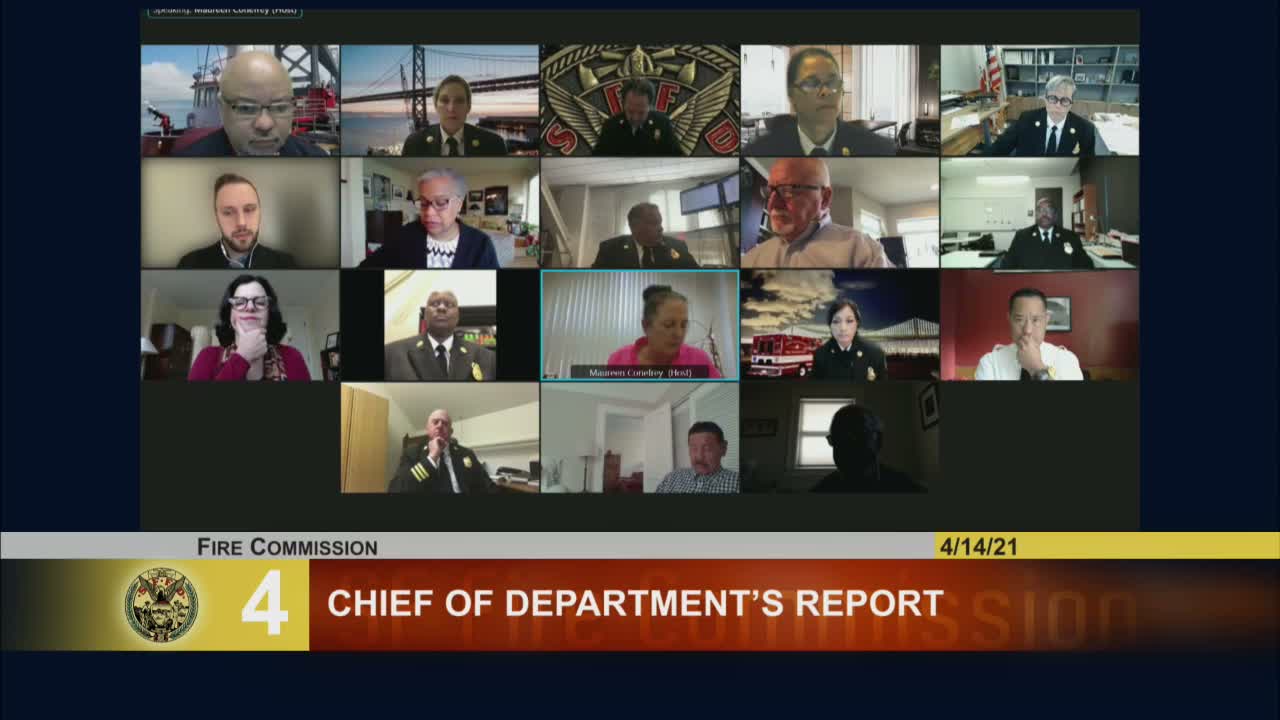
At an April 14 Fire Commission meeting, department leaders reported a 72% first-dose vaccination rate among members, previewed a Stanford PFAS study of firefighter exposures and described plans for a peer-support dog and expanded behavioral-health services.
The San Francisco Fire Department told its Fire Commission on April 14 that it is ramping up health, safety and wellness programs for uniformed members, including a continued push on COVID-19 vaccinations, ongoing PFAS testing with Stanford researchers and a plan to add a peer-support dog to respond to critical incidents.
Chief of Department Janine Nicholson told commissioners the department’s “COVID‑19 vaccination rate is going up. It is now at 72 percent for a first vaccination,” and said leadership is pressing the Mayor’s Budget Office to preserve staffing levels. Acting Battalion Chief Natasha Parks and industrial hygienist Tony Boone detailed the Health, Safety and Wellness office’s work, which includes a behavioral-health unit, a critical incident response team and peer-support services available 24/7.
Parks described ongoing training and outreach, saying the department has run mental-health first-aid classes and scheduled peer-support training in May and July with no department cost. She also announced participation in a women’s firefighter cancer cohort study and said the department expects to receive a certified peer-support dog and handler “hopefully in the next month or two” to provide on-scene and station support for members.
Boone outlined environmental and occupational-health projects, including expanded N95 and SCBA fit-testing and updated programs required by Cal/OSHA. He told commissioners the department hosted a Stanford study in March collecting blood and urine samples from volunteer firefighters to quantify per- and polyfluoroalkyl substances (PFAS) exposure; he said sample collection will continue “for 2 to 5 months” and the department is seeking PFAS‑free firefighting foam and turnout gear as alternatives become available.
Boone also reported an asbestos test at Station 7 returned non-detectable results and described routine inspections of underground storage tanks and spill-prevention controls at station facilities. The presentation concluded with a promise to continue coordinating with the physician’s office and other city agencies on prevention and training.
Commissioners commended the focus on mental-health resources and asked for details on the PFAS testing and the peer-support-dog timeline. “We brought up the policy based on what the city and county states and the state says,” Boone said of his workplace programs, adding the department is working to remain compliant with state environmental reporting and Cal/OSHA standards.
Next steps: commissioners requested follow-ups on PFAS study findings when available, confirmation of the dog-and-handler schedule and continued updates on vaccination outreach.