Get Full Government Meeting Transcripts, Videos, & Alerts Forever!
Get email alerts on the Diversity Recruitment topic
No spam. Unsubscribe anytime.
Black Firefighters Association urges action as department’s Black representation falls
Summary
Sherman Tillman of the Black Firefighters Association told commissioners Black representation in the San Francisco Fire Department has fallen to 152 and urged quarterly HR reporting and targeted recruitment; Chief Janine Nicholson outlined DEI and recruitment reforms.
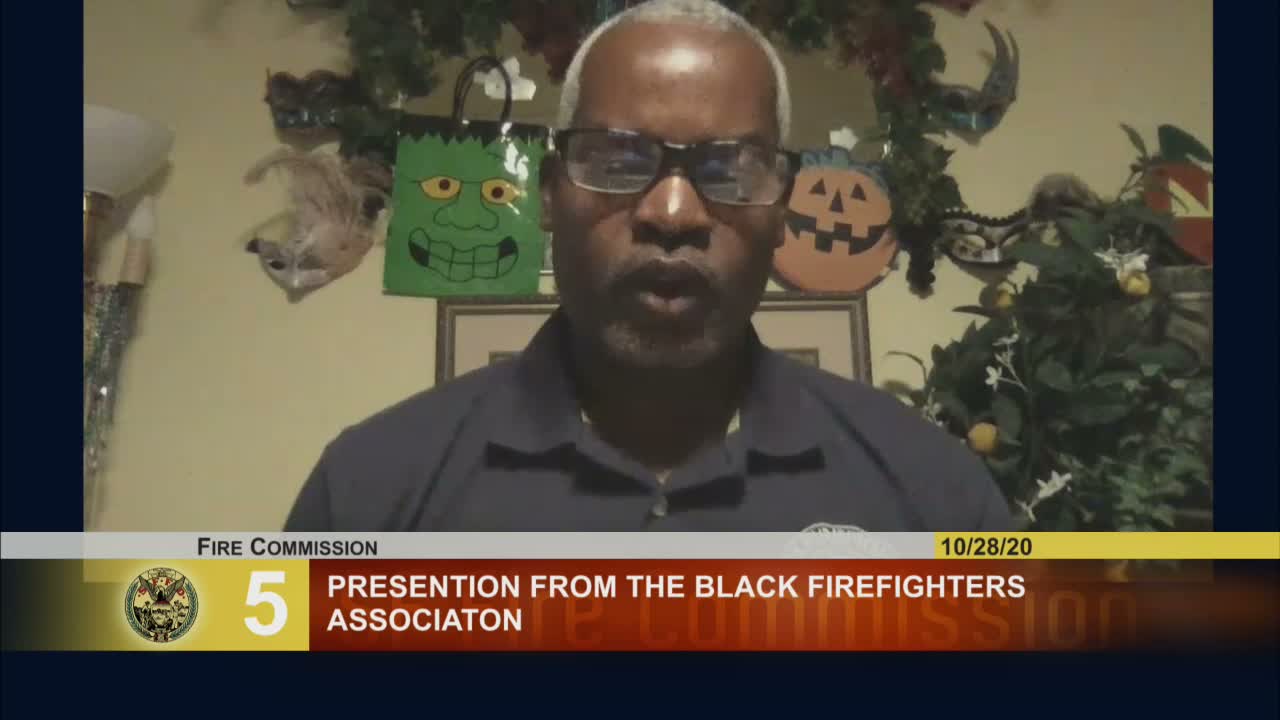
SAN FRANCISCO — Sherman Tillman, president of the Black Firefighters Association, urged the Fire Commission on Oct. 28 to address declining Black representation in the San Francisco Fire Department and described his group’s community and youth outreach work.
Tillman recounted the association’s year of community activities — food distributions, school visits, mask distribution at rallies, voter registration and plans for a mural and street naming honoring Earl Gage Jr., the department’s first Black firefighter. He said the association operates a community building on Third Street (1468 Third Street) as a neighborhood resource.
Turning to recruitment and workforce demographics, Tillman told commissioners that the number of Black firefighters in the department has fallen to 152 and described that trend as ‘‘an alarm bell.’’ He cited an overall share for Black firefighters of roughly 7.84% and said Black women account for approximately 1% of the department. He urged the commission to request the HR race‑and‑gender report regularly and recommended more targeted recruitment.
Commissioners questioned Tillman on outreach and academy practices; he described the association’s youth academy for ages roughly 12–18, which provides CPR/first‑aid instruction, life skills and a modest stipend (he said the stipend was raised from about $25 to roughly $35 per session after a grant). The academy aims to be a pathway to the department, Tillman said, and he described active partnerships with local YMCAs and school programs.
Chief Nicholson responded that equity, diversity and inclusion are department priorities and summarized several initiatives: succession planning and expanded local training so candidates need not travel for required classes; reconsideration of the National Testing Network vendor because of documented adverse impacts on women and African‑American applicants; smaller academies to reduce attrition; and the creation of a Diversity, Equity and Inclusion officer and committee. She also described a planned City EMT (EMS Corps) program in District 10 that would provide wraparound services and EMT certification for at‑risk youth and could form a recruitment pipeline.
Tillman and commissioners acknowledged progress in community programs but said quantitative HR reporting and concrete recruitment timelines are needed. The commission asked the department to provide recruitment metrics and the HR race‑and‑gender report before selection of the next academy class so commissioners can review the data.
The presentation prompted an extended Q&A about historical test practices, the consent‑decree era, and how national testing and class size have affected hiring outcomes. No formal policy changes were adopted at the meeting; commissioners requested follow‑up reporting and scheduled further discussion.