Get Full Government Meeting Transcripts, Videos, & Alerts Forever!
Get email alerts on the Department Operations topic
No spam. Unsubscribe anytime.
SFFD reports Pier 45 fire response, July 4 surge and rising cliff rescues; department outlines outreach steps
Summary
Deputy Chief Victor Wersch described a busy month with a second-alarm brush fire on Yerba Buena Island, a major Pier 45 incident where fireboats were crucial, a 51% spike in calls on July 4, and repeated cliff rescues; the department said it is expanding signage, outreach and targeted staffing to reduce cliff incidents.
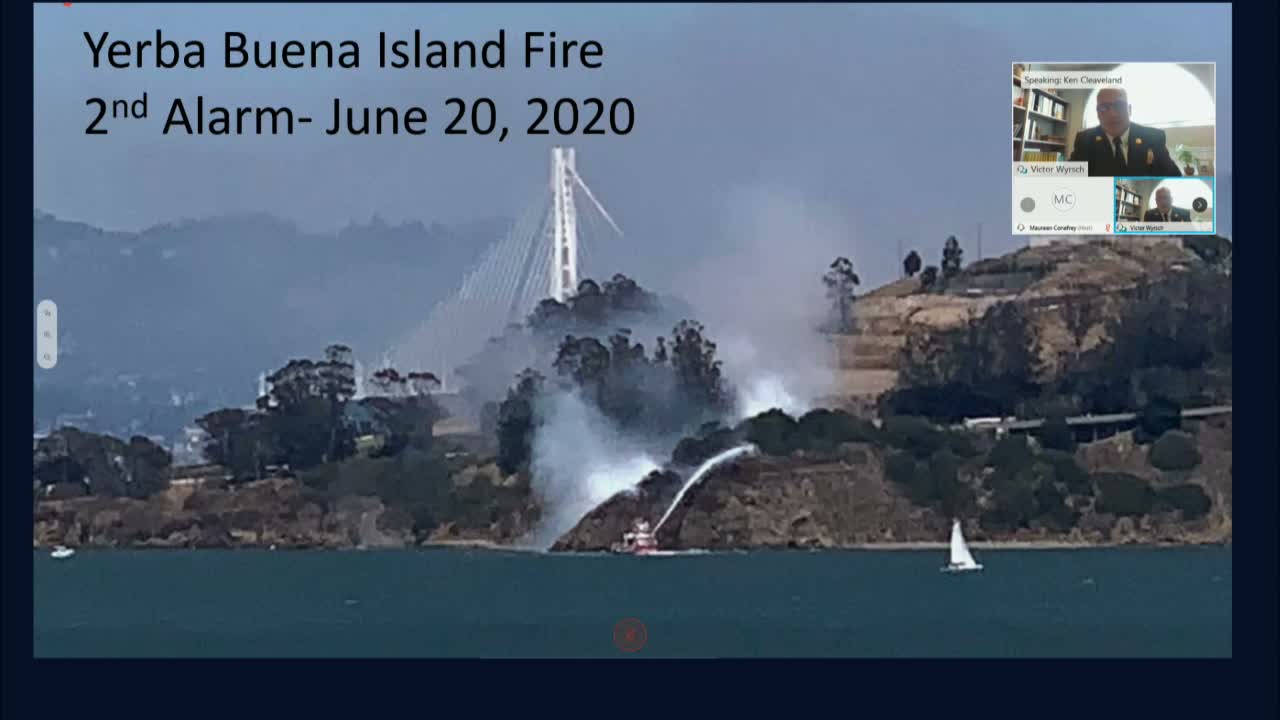
Deputy Chief of Operations Victor Wersch told the Fire Commission that San Francisco Fire Department crews handled a string of major incidents in June and July, including a second-alarm brush fire on Yerba Buena Island and a large Pier 45 fire in which fireboats played an essential role.
Wersch described the Pier 45 response in detail, saying fireboat crews were able to apply large volumes of water to protect the SS Jeremiah O—Brien and nearby structures. "They came in and gently just kissed the pier, set themselves up perfectly," he said, praising boat crews and engine companies for preventing greater loss.
The department also reported operational metrics: 26 first alarms in June, nine grass fires, 14 encampment fires and nine high-angle cliff rescues; Wersch said the department rescued nine people and one dog in those cliff incidents and credited preventative outreach as part of the response.
Wersch said the July 4 holiday produced a large surge in demand—about 528 runs in a 24-hour period, a roughly 51% increase over a typical day—and prompted temporary staffing and dispatch changes such as additional mini pumpers, Tactical Emergency Medical Support units and single-unit dispatches to preserve city-wide coverage.
Addressing repeated cliff rescues, Wersch and other command staff said the department is emphasizing signage and public outreach and deploying targeted patrols on high-risk days. Commissioners asked for a more robust future briefing on specific outreach partners and signage placement.
On overdose response, Wersch reported a decline in Narcan administrations from a March peak: 146 administrations in June (down from 212 in May and 238 in March). He suggested drug-strain variability may influence monthly fluctuation.
Wersch and Chief Janine Nicholson also briefed commissioners on COVID-era operational units: RC5, a temporarily activated COVID response unit that handled PPE distribution, exposure reporting and COVID calls; and EMS6, which the chief said helped move hundreds of people into housing during a recent Tenderloin operation.
Commissioners asked about operational continuity when Station 13 relocates for demolition; Chief Nicholson said relocation options are still under discussion and that a final plan will be determined closer to any move-out date.
The department said it will continue public education on cliff safety, firework hazards and safe sleeping sites, and will monitor slow-streets and transit-only lane changes to preserve emergency access.