Get Full Government Meeting Transcripts, Videos, & Alerts Forever!
Get email alerts on the Emergency Communications topic
No spam. Unsubscribe anytime.
San Francisco DEM outlines 911 workload, AlertSF reach and tech pilots to improve caller location
Summary
Department of Emergency Management Director Mary Ellen Carroll told the Fire Commission that the city’s combined 911 dispatchers handled about 1.4 million calls last year, described technology pilots to improve location accuracy, and urged wider take-up of AlertSF and community preparedness programs.
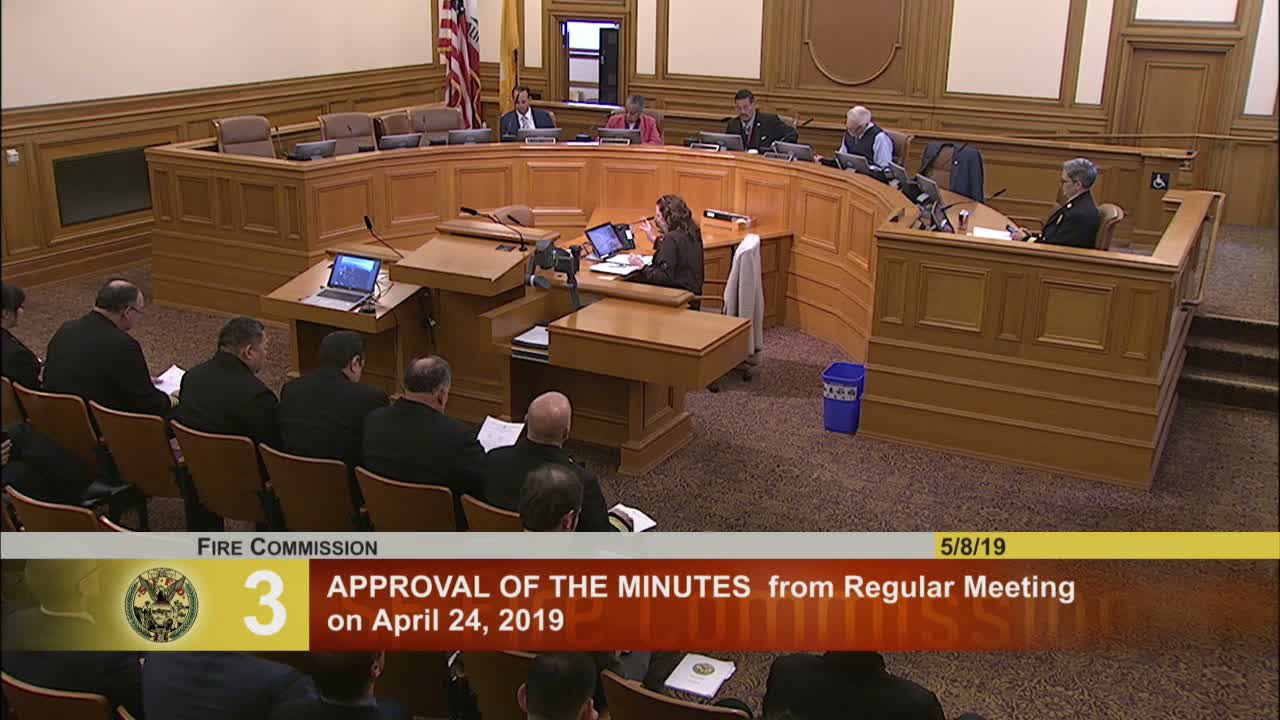
Department of Emergency Management Director Mary Ellen Carroll told the San Francisco Fire Commission on May 8 that the city's emergency communications system handled roughly 1,400,000 calls last year and operates as a combined 911 dispatch for police, fire and emergency medical services.
Carroll said the 911 center fields emergency and nonemergency calls in more than 170 languages and that, statistically, about 55 percent of calls are emergency-related. Of the emergency calls, she said roughly 80 percent are law-enforcement related, 16 percent are medical and 4 percent are fire-related. Carroll pointed to the city’s contract with Voyance to provide on-demand telephonic interpretation when a language-specific call-taker is not available.
Carroll described a January 2019 launch of a centralized WATCH Center to monitor major incidents in real time and support faster public alerts. She urged more residents to sign up for AlertSF, the city’s subscription-based text-and-email system, noting it reached about 118,000 subscribers (roughly 13 percent of the city’s population) and stressing that the system complements wireless emergency alerts, sirens and social media.
On technology, Carroll said the department is piloting RapidSOS and working with private firms to improve caller location data, including ‘‘vertical’’ information (the floor level) for high-rise addresses. She described these collaborations as pilots that are already showing progress but not yet universal coverage.
Commissioners questioned feasibility and legal authority for obtaining location from private platforms. Carroll and the department’s communications staff explained that some technology partners are collaborating voluntarily; the pilot focuses on integration with public dispatch systems rather than mandatory data-sharing.
Carroll and staff also reviewed public outreach efforts, including the ‘‘Make the Right Call’’ campaign to educate residents about when to use 911, 311 or nonemergency numbers. Carroll said the campaign produced wide reach when it was funded and that the department continues community presentations and partnerships with first responders to reinforce the message.
Carroll recommended continued redundancy in alerting — combining AlertSF, wireless emergency alerts, outdoor sirens and in-person outreach — to reach populations who do not subscribe to AlertSF or whose devices fail to receive tests. She also described mutual-aid deployments to northern fire jurisdictions in 2018–19 and ongoing training and certification for civilian mutual-aid teams.
The commission pressed for more joint exercises; Carroll said Fleet Week remains an annual full‑scale exercise and the department conducts multiple exercises across the year. She said the city is updating its five‑year emergency response plan and working with departments on annexes for specific support functions.
The department’s presentation concluded with an invitation for further coordination with the Fire Department on call‑handling priorities and with commissioners who wanted to observe future joint drills.