Get Full Government Meeting Transcripts, Videos, & Alerts Forever!
Get email alerts on the Operations Incidents topic
No spam. Unsubscribe anytime.
SFFD reports on multi-alarm Gary/Parker gas fire, Fort Funston cliff rescue and EMS staffing impacts
Summary
At the March 13 meeting the San Francisco Fire Department described a multi-alarm gas-line fire on Gary/Parker that required defensive operations until PG&E shut off gas (about 2.5 hours), a Fort Funston cliff collapse that ended in one fatality, and EMS staffing and transport impacts after the new Cathedral Hill hospital opening.
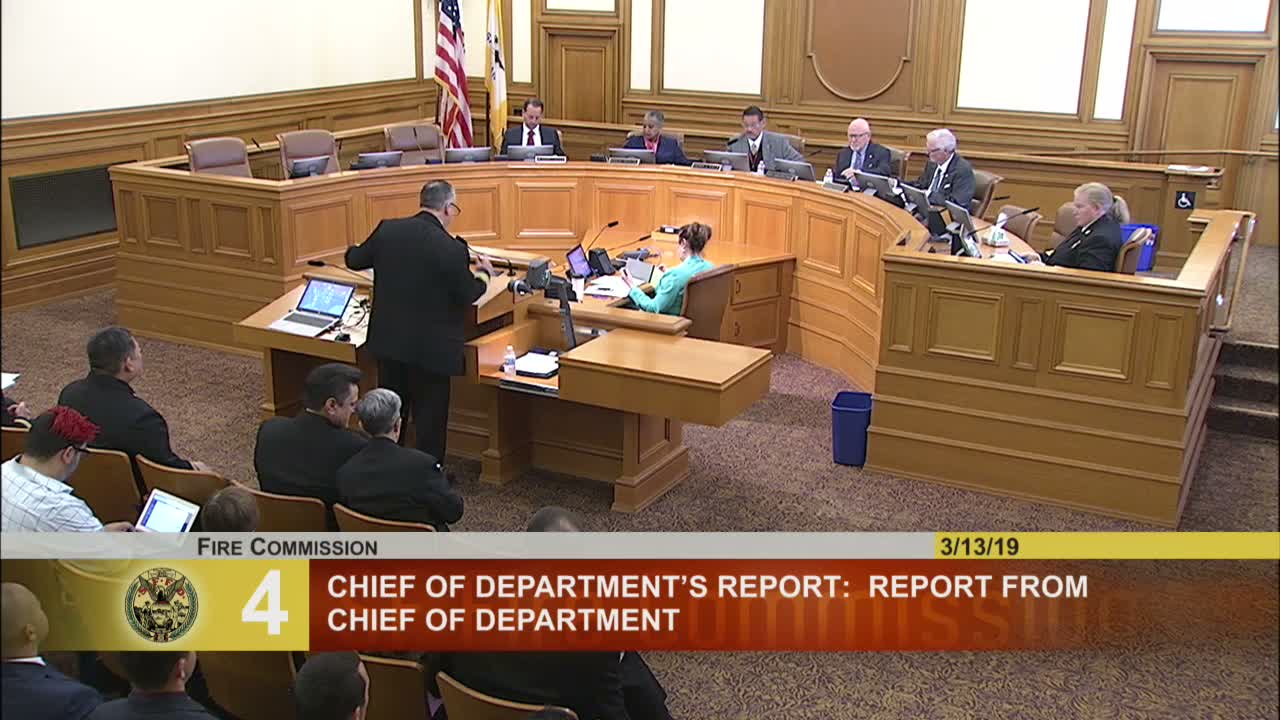
Deputy Chief Mark Gonzales delivered the operations report for February at the Fire Commission meeting on March 13, detailing several major incidents and ongoing operational concerns.
Gonzales described a third-alarm gas-line fire at 3300 Gary Street (the Gary/Parker incident). Command teams set defensive operations when heavy fire and breached gas lines prevented interior attack; PG&E required an estimated 2.5 hours to isolate the gas with crews protecting exposures and cooling nearby buildings. Gonzales credited responders for containing the fire and noted coordination with PG&E and SFFD divisions; he said PG&E reported 17 different locations it had to address to secure the gas infrastructure.
Gonzales also reviewed the Feb. 22 Fort Funston cliff collapse and entrapment. Battalion Chief Nicole Juratovac and other operational leaders described a complex high-angle response where secondary collapses forced commanders to switch from rescue to recovery about two hours and 45 minutes into operations. Gonzales said the collapse appeared linked to steep slope geometry and heavy rainfall, and he praised responders for their on-scene performance under dangerous conditions.
On EMS and hospital transports, Gonzales said the new Cathedral Hill (CPMC) hospital opened March 1 and changed patient flow patterns. Some former receiving campuses are no longer accepting SFFD transports, producing longer transport times from the west side and requiring outreach so the public is not surprised to find closed ER entrances. Commissioners pressed for clearer public messaging and for staff to work with the hospitals on signage and wayfinding.
Gonzales outlined staffing issues in EMS and the paramedic per-diem program (H8). He said roughly 180 ambulance personnel are on the street now and the department aims for a larger permanent complement (around 200) with an onethree staffing ratio for reliable coverage; per-diem and voluntary overtime shifts are filling gaps while recruitment and training continue. Gonzales asked for more tightly compiled statistics to inform staffing and outreach decisions.
The commission praised recent outreach (high-surf banners, flyers, station presence) and asked for more school-based education and data to guide future prevention work. Hayes White and operations leaders said they will continue outreach, refine statistics and coördinate with partner agencies.