Get Full Government Meeting Transcripts, Videos, & Alerts Forever!
Get email alerts on the Budget Ambulance topic
No spam. Unsubscribe anytime.
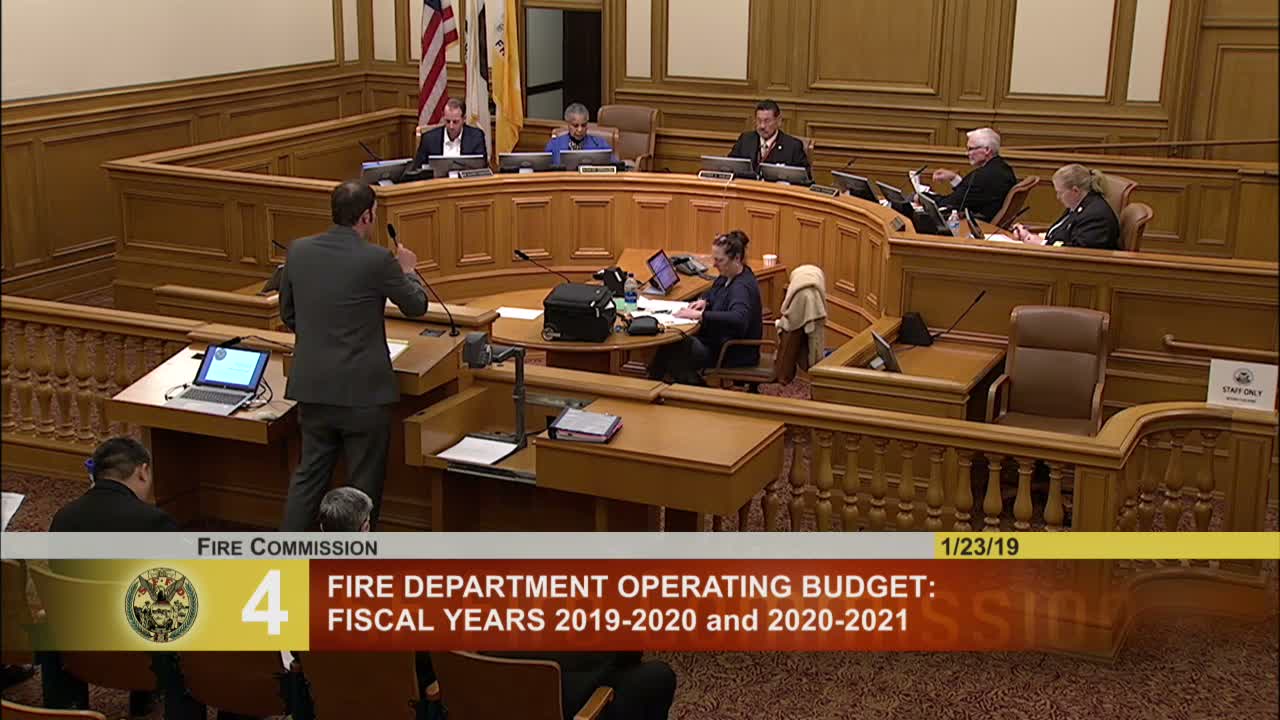
Fire Commission hears budget squeeze and $100M-a-year ambulance write-offs; commissioners press for homeless-cost breakdown
Summary
At a January Fire Commission meeting, department finance staff outlined multi-year deficits and asked for reductions while commissioners pressed for detail on roughly $135M in ambulance billings and about $106M in annual write-offs, exploring whether homelessness and other agencies should share costs.
Deputy Director Mark Corso told the San Francisco Fire Commission that the city projects large shortfalls and has asked departments to trim general-fund support as part of a multi-year budget process. "The city's projecting approximately $271,000,000 deficit over the next 2 fiscal years," Corso said, and staff were asked to submit 2% reductions in each of the next two years plus a 1% contingency reduction.
The presentation closed with a focused exchange about ambulance revenue. Commissioners cited department figures showing about $135,000,000 in ambulance billings and roughly $106,000,000 in write-offs, leaving roughly $28,000,000 in net expected revenue. Commissioner Joe Alioto Veronese pressed the department to explain the write-offs and to determine how much is linked to the unhoused population. "So we've written off a billion dollars in these fees over the last 10 years," Veronese said, calling for a deeper accounting and proposing that the Department of Homelessness or receiving hospitals might shoulder part of the cost.
Corso and Chief Joanne Hayes White described the write-offs as largely structural. Corso said the large gap stems from fixed reimbursement rates for Medi-Cal and Medicare and from unpaid bills by uninsured patients. "For example, if we have a $2,000 ambulance bill and the patient has Medi-Cal insurance, they will reimburse us approximately $125 on that, and that remaining balance is then considered written off," he said. The department contracts with Intermedix for billing and uses hardship-waiver rules and enrollment outreach for uninsured patients.
Chief Hayes White and Corso noted some revenue gains from state-level programs: advocates pursued the Ground Emergency Medical Transport (GEMT) supplemental-reimbursement program, and Corso said GEMT has brought about $10,000,000 into department coffers over the past five years. Both officials also said collection rates are similar in many large U.S. cities and that changing the reimbursement structure requires state and federal action.
Commissioners asked staff to return with more precise breakdowns (Medi-Cal vs. Medicare vs. uninsured vs. homeless-related addresses) and to quantify what portion of the write-offs could be influenced by interagency cost-sharing or hospital billing arrangements. Corso agreed to provide additional detail in advance of the next meeting and reiterated that the commission is expected to consider budget approval at its first February meeting.
The discussion did not produce any formal budget action; commissioners directed staff to gather and present the requested data and to continue interagency outreach.