Get Full Government Meeting Transcripts, Videos, & Alerts Forever!
Get email alerts on the Technology Public Safety topic
No spam. Unsubscribe anytime.
Commission adopts drone policy, staff to pursue FAA waivers and COA
Summary
The Fire Commission adopted a new drone policy to support damage assessment, search and rescue and incident awareness; staff will seek FAA Part 107 waivers and a city COA and complete pilot training before full operations.
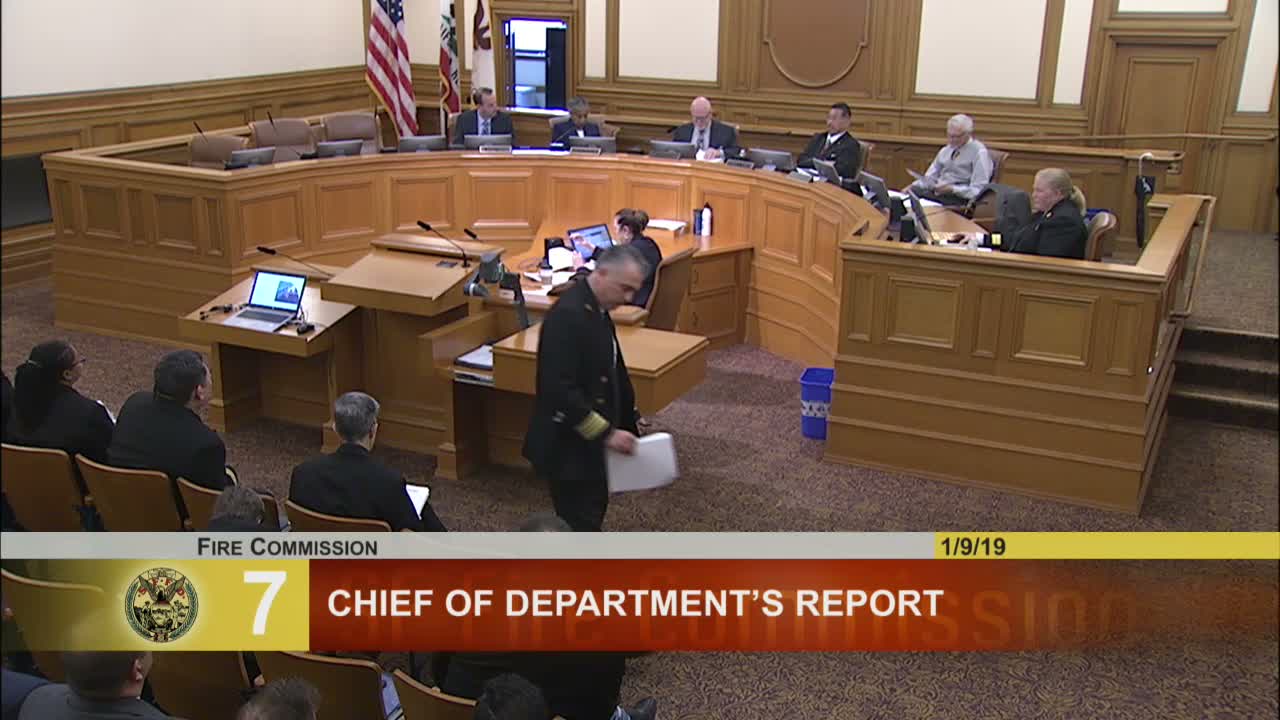
The San Francisco Fire Commission voted unanimously Jan. 9 to adopt a department drone policy that sets a path for using unmanned aircraft for incident assessment, search and rescue and situational awareness while preserving data‑security safeguards.
Assistant Deputy Chief Michael Cochran told commissioners the policy responds to operational needs—rapid damage assessment during wildland or earthquake events, thermal imaging at night for search and rescue, and enhanced situational awareness for safety officers. He said the citywide IT committee’s blanket restrictions (no night flights, no flights over people, line‑of‑sight limits) would not meet emergency operational needs and that the department must pursue FAA Part 107 waivers and a COA (certificate of authorization) to operate under emergency exemptions.
Cochran described a procurement and training plan: the department has identified a vendor list and a flight school for FAA training, received grant funding for equipment through a federal urban area security initiative grant, and prepared exemption language that has been submitted to the city attorney. He said selected staff (safety officers and assistant chiefs) will attend flight school and obtain FAA 107 pilot certification so the program can begin on a limited operational footing while waivers and COA are finalized.
Commissioner Joe Alioto Veronese proposed clarifying language to ensure FAA‑granted emergency exemptions (flight over people, night operations, altitude and line‑of‑sight exceptions, and airport restrictions) are expressly incorporated; staff and the chief agreed. The commission adopted the policy with that amendment and asked staff to return with implementation milestones once FAA and city approvals are secured.
The department will seek FAA waivers and a city COA before routine night or over‑people flights; Commissioners emphasized the need for clear operational and data‑security protocols before expanding use.