Get Full Government Meeting Transcripts, Videos, & Alerts Forever!
Get email alerts on the Budget topic
No spam. Unsubscribe anytime.
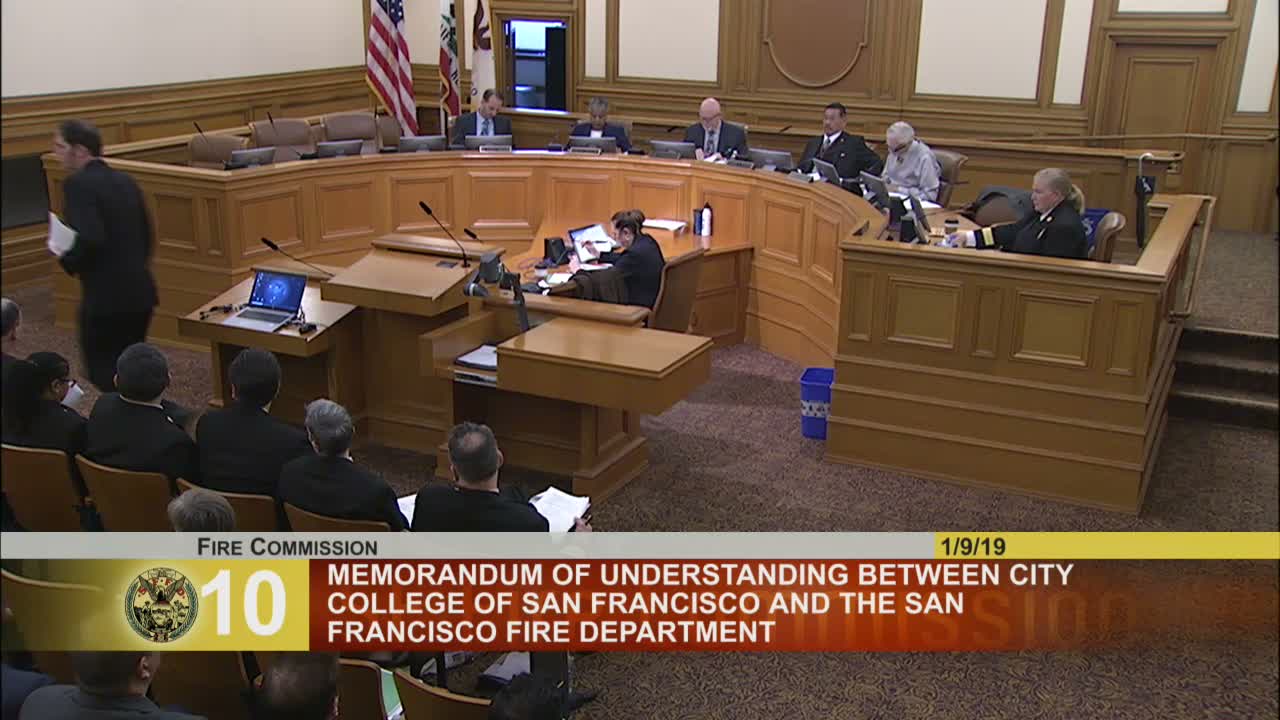
Fire Commission hears stark five‑year outlook, approves capital and IT requests
Summary
Finance staff told the commission the city faces a multi‑year structural gap and asked departments to propose 2% reductions; the commission approved the department’s capital and IT submittals and discussed options including voter set‑asides and an upcoming general obligation bond.
San Francisco’s Fire Commission on Jan. 9 heard a multi‑year financial outlook that projects expenditures growing faster than revenues and approved the department’s capital and information‑technology project requests for the coming budget cycle.
Deputy Chief/Finance Mark Corso said the city’s five‑year financial plan projects general‑fund expenditures rising roughly 25% while revenues are expected to grow about 14% over the same period, producing a sustained structural shortfall. Corso cited personnel costs (pensions, benefits, salaries) and health‑care growth as primary drivers and noted an illustrative citywide deficit approaching $650 million in the final year of the five‑year model.
As part of the mayor’s budget instructions, departments were asked to propose reductions equivalent to 2% per year plus an additional 1% contingency for the mayor’s office to review. Corso walked commissioners through timelines that include departmental submissions due Feb. 21 and a mayoral balanced budget submittal to the Board of Supervisors by June 1.
Commissioners used the discussion to press departmental priorities. Commissioner Joe Alioto Veronese highlighted that 38% of EMS calls relate to people experiencing homelessness and urged the commission and department to advocate for sustained EMS funding rather than cuts. Commissioners discussed whether fire funding should be pursued as a voter‑enacted set‑aside (Prop F was noted as an existing voter set‑aside for minimum staffing) and asked staff to research feasibility and tradeoffs.
On capital and IT requests, Corso presented a portfolio of station repairs, HVAC and generator work, kitchen upgrades, electrical infrastructure, oxygen cascade systems, and IT projects including incident display boards, desktop virtualization, a training simulator, an electronic health record solution and tablets for field crews. He said the department requested roughly $30–35 million in year one and about $54 million in year two to address deferred maintenance and projects that fall outside current bond scopes.
Commissioners raised the department’s lack of a formal seat at the city’s capital planning committee and asked staff to renew the request with the mayor’s office and capital planning staff. Corso also reported that last year the department requested approximately $35 million and was allocated about $3.5 million, and that IT requests previously (~$1.2M) had not been funded beyond a joint radios project.
Commissioner Covington moved to approve the department’s capital and IT requests; the motion was seconded and the commission voted unanimous in favor.
Staff flagged a pending general obligation bond (Easter bond) anticipated for the November ballot with a proposed total of $600 million that would set aside funds for public safety building retrofits, a training facility and AWSS work; commissioners discussed outreach obligations and the two‑thirds threshold required for passage.