Get Full Government Meeting Transcripts, Videos, & Alerts Forever!
Get email alerts on the Marine Resources topic
No spam. Unsubscribe anytime.
Fire Department outlines capabilities of new CBRN-capable marine response vessel
Summary
Deputy Chief Janine Nicholson described a new marine response vessel (nicknamed 'moose boat') arriving in September with firefighting monitors, dive platform capability and chemical/radiological detection funded through a grant; training and berthing plans are in progress.
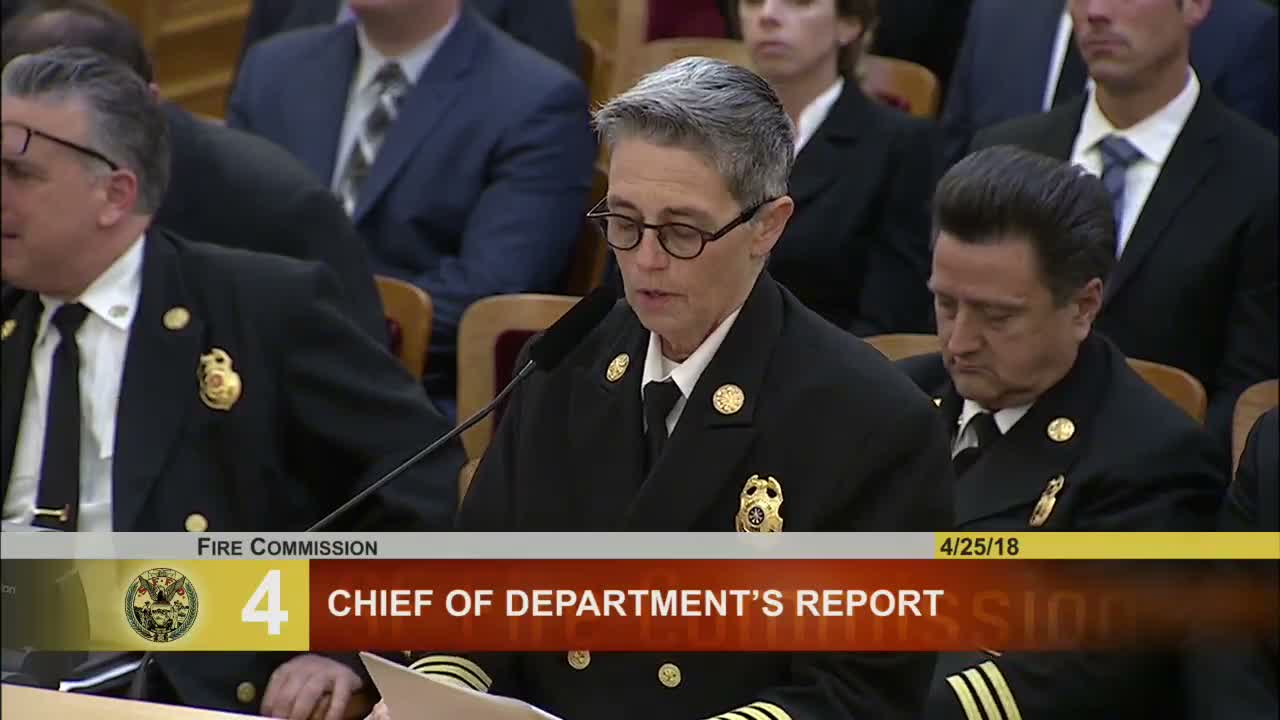
Deputy Chief Janine Nicholson told the Fire Commission on April 25 that the department will receive a new marine response vessel in September—referred to informally in the meeting as the "moose boat"—that will add a shallow-draft, fast-response capability with firefighting monitors, a dive platform and chemical, biological, radiological and nuclear detection systems.
"It's capable of firefighting, has a dive platform. It's also capable, has CBRN capabilities," Nicholson said, describing the vessel’s multipurpose role and noting training schedules are under development. Assistant Deputy Chief Tony Rivera added technical detail: the vessel’s two monitors have approximately 2,000 gallons per minute capacity, roughly equivalent to one city fire engine each, and the boat uses seawater intakes so it can operate without depleting local freshwater supplies.
The department said the boat was acquired through a grant; officials are determining where to berth it and whether Station 35 will house the crew once the facility is completed. Commissioners asked for comparative performance details versus the city's larger fireboat Saint Francis; Rivera noted the Saint Francis delivers far greater flow (about 18,000 gpm) but the new vessel offers speed (approximated at 40 mph) and access to shallower waters.
Next steps: finalize training schedules, identify berthing and staffing arrangements and coordinate placement in the stations' design documents. No formal action was taken at the meeting.