Get Full Government Meeting Transcripts, Videos, & Alerts Forever!
Get email alerts on the Firefighter Health topic
No spam. Unsubscribe anytime.
SFFD awaiting North Bay exposure results; officials say findings could drive policy
Summary
The department said 179 people were tested after North Bay deployments, with initial heavy‑metals tests done and further triage planned; officials told the commission results may be ready in May and could lead to policy or operational changes.
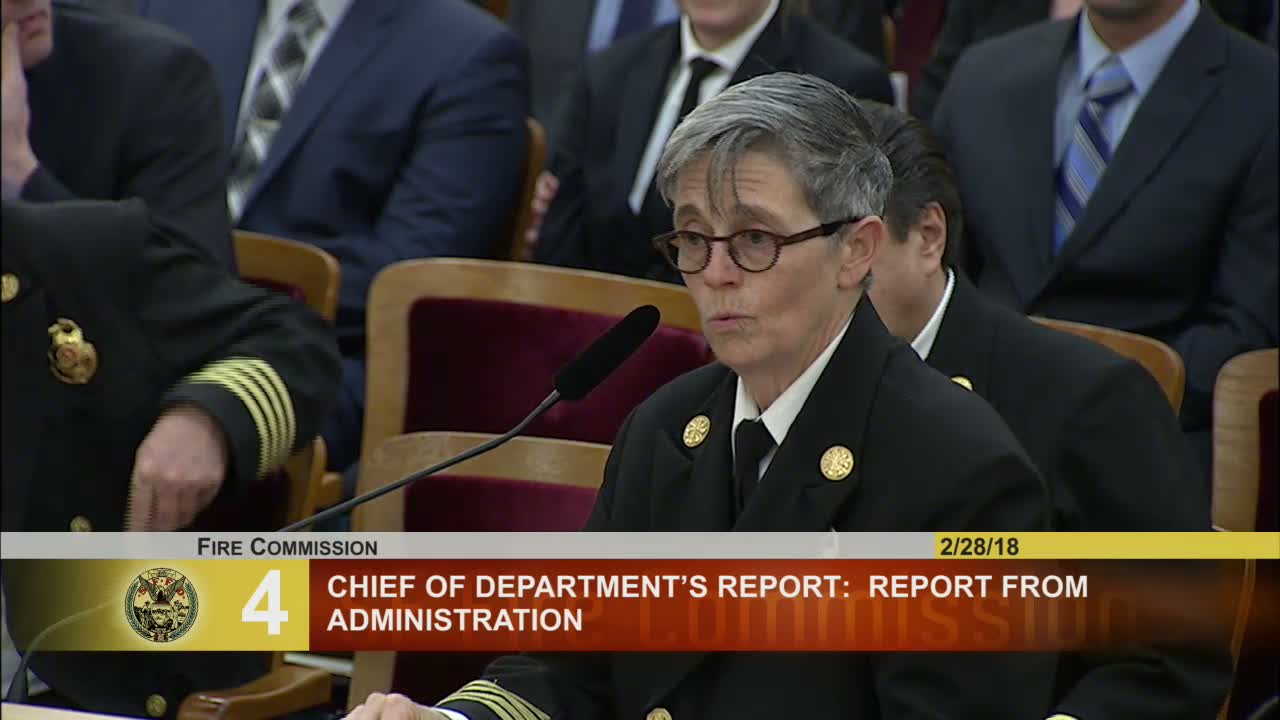
Deputy Chief Jeanine Nicholson told the commission that 179 people who were deployed to the North Bay fires underwent testing, including 65 San Francisco firefighters in the study group. "They have completed the initial testing for heavy metals and then they're going to triage samples of those people based on who was deployed the longest," she said, and added that further testing for non‑metal toxins is planned for a subset of the cohort with the most exposure. She said the researchers expected additional results to be available in May and that they would be willing to present findings to the commission.
Commissioners asked whether the department would use the results to change policies or operations. Nicholson answered affirmatively: "We are very interested in the results...I think that will definitely help to drive policy, not just for us, but for other departments as well," and she cited prior pilot testing done with the San Francisco Firefighters Cancer Prevention Foundation. Commissioners asked that the Cancer Prevention Foundation present findings and that the department consider appropriate next steps if the results recommend operational changes.
The department said it already has updated respiratory protection policies, uses gas indicators post‑fire, and had taken steps such as installing wash extractors, adopting decontamination guidance and adjusting respiratory protection protocols — actions intended to reduce long‑term exposure risks while the study proceeds.