Get Full Government Meeting Transcripts, Videos, & Alerts Forever!
Get email alerts on the Homelessness And Ems topic
No spam. Unsubscribe anytime.
Fire Commission urges clearer homeless-call data as budget talks near
Summary
San Francisco Fire Department leaders told the Fire Commission that a large share of emergency medical and response calls involve people without identifiable homes and urged the department to highlight those figures in upcoming budget hearings on April 26.
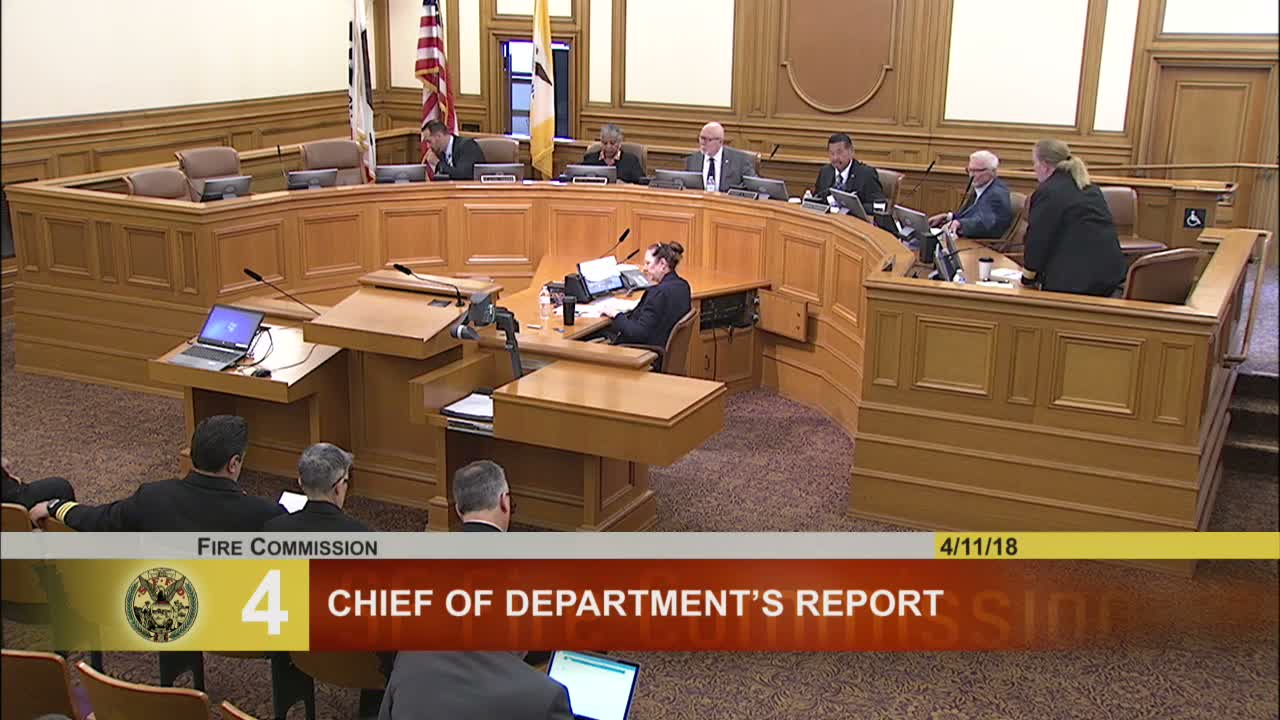
San Francisco — The San Francisco Fire Department told the Fire Commission on Wednesday that a significant portion of its calls involve people without identifiable homes, and commissioners said those numbers should be made central to the department's upcoming budget presentation.
Chief Joanne Hayes White said the department will present to the city’s budget and finance committee on April 26 and confirmed the mayor’s office and budget staff are aware of rising call volumes. "We will be presenting with other public safety departments on April 26," Hayes White said.
Commissioner Joe Alioto Veronese pressed department leaders for station-level detail showing how much time and budget the department spends on homeless-related responses. Veronese cited station-specific figures from the department report, saying that in recent months some stations recorded roughly 70–80 percent of encounters as having "no identifiable home," and that Station 29 had about 73 percent homeless-related calls for the month referenced in the packet.
Deputy Chief Mark Gonzales and Assistant Deputy Chief Zanoff said the numbers reflect EMS encounters and acknowledged the data are rough and being improved. Gonzales described the data as "rough numbers" because an address on a run does not always indicate a stable residence; crews sometimes cannot obtain an address from an unconscious patient.
Commissioners asked that the homelessness-related call statistics be shared with the mayor’s budget office and Supervisor Malia Cohen, who is chairing the committee this year. Mark Orso from finance and planning said the department has begun conversations with the mayor's office and will continue to press for staffing and equipment to address rising call volumes in its submission to the mayor in June.
Why it matters: Commissioners said such station-level and program-specific statistics — particularly for the EMS6 unit that targets frequent callers — help quantify how much of the department’s operational load and budget is tied to street homelessness. Veronese urged that these figures be incorporated into the April 26 presentation so that city leaders can make more informed budget decisions.
Next steps: The department agreed to add homeless-related call metrics into upcoming budget discussions and to work on clarifying station-by-station breakdowns. The commission did not take a formal vote on budget requests at the meeting.