Get Full Government Meeting Transcripts, Videos, & Alerts Forever!
Get email alerts on the Mutual Aid topic
No spam. Unsubscribe anytime.
Commissioners press for state funding, pre‑deployment after wildfire resource shortfalls
Summary
San Francisco commissioners and department leaders discussed statewide mutual‑aid shortfalls after last season's fires, including historical capacity gaps and a proposed $100 million pre‑deployment/reimbursement fund; staff described using deployment reimbursements to buy surplus state engines.
Commissioners pressed San Francisco Fire Department leaders on Feb. 28 about statewide mutual‑aid capacity after recent wildfires that strained engine availability.
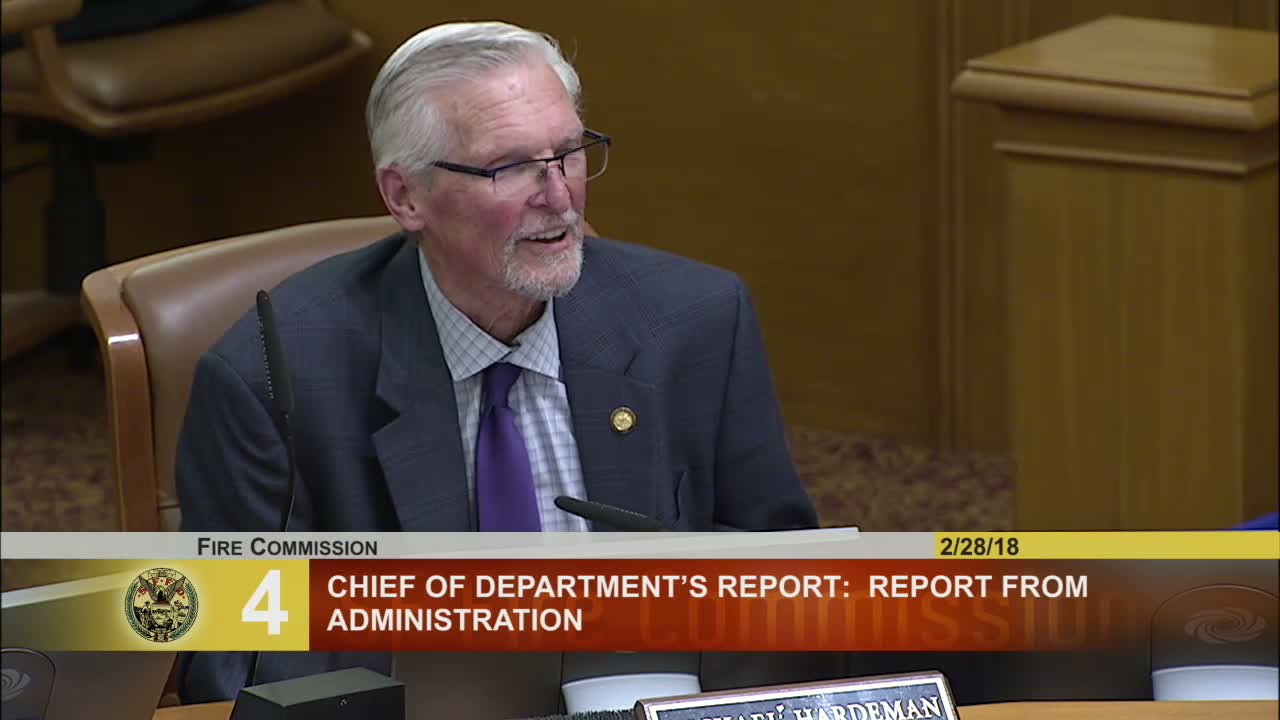
Commissioner Michael Hardiman asked for context about reports that mutual‑aid deployments were short of requested engines. Chief Joanne Hayes White said a finite number of resources exists and Cal Fire is examining alternatives. Chief Saragusa summarized historical and current capacity: "In 2003 the state was able to put 1,000 fire engines on the road within 24 hours; the estimate right now is possibly 400 or 500 (strike teams)," he said, and noted recent requests for large numbers of engines produced far fewer immediate deployments.
Saragusa and others described an idea discussed by some leaders: a roughly $100,000,000 fund to support pre‑deployment and staging of resources for high‑fire conditions, administered at the state level as a reimbursement vehicle to pay departments when they supply resources. "The monies would not be coming directly to departments. It would be in a bank account ... allow the office of emergency services to have a fund available to reimburse departments," he said. Commissioners and staff acknowledged significant financial and administrative hurdles to creating such a fund and said advocacy — through associations like the Cal Chiefs Association and elected state officials — would be required.
San Francisco staff described a more immediate revenue strategy: purchasing surplus, low‑mileage state engines when the state cycles its fleet and using deployment reimbursement revenue to fund those purchases. Mark Corso said reimbursement for deployed personnel and apparatus historically can be used for training, equipment and apparatus replacement.
Commissioner Francie Covington asked that mutual aid and funding advocacy be placed on a future agenda so the commission can "drill down and get more information" for the public and better inform local priorities.