Get Full Government Meeting Transcripts, Videos, & Alerts Forever!
Get email alerts on the Ems Operations topic
No spam. Unsubscribe anytime.
After Labor Day surge, SFFD outlines mutual aid response and a six-week MPDS dispatch pilot
Summary
SFFD reported an unprecedented Labor Day weekend surge (over 2,400 calls Sept. 1–4, double normal volume), mutual-aid deployments and nearly normal response times; the department also launched a six-week dispatch pilot using MPDS call determinants to better match ALS resources to patient need.
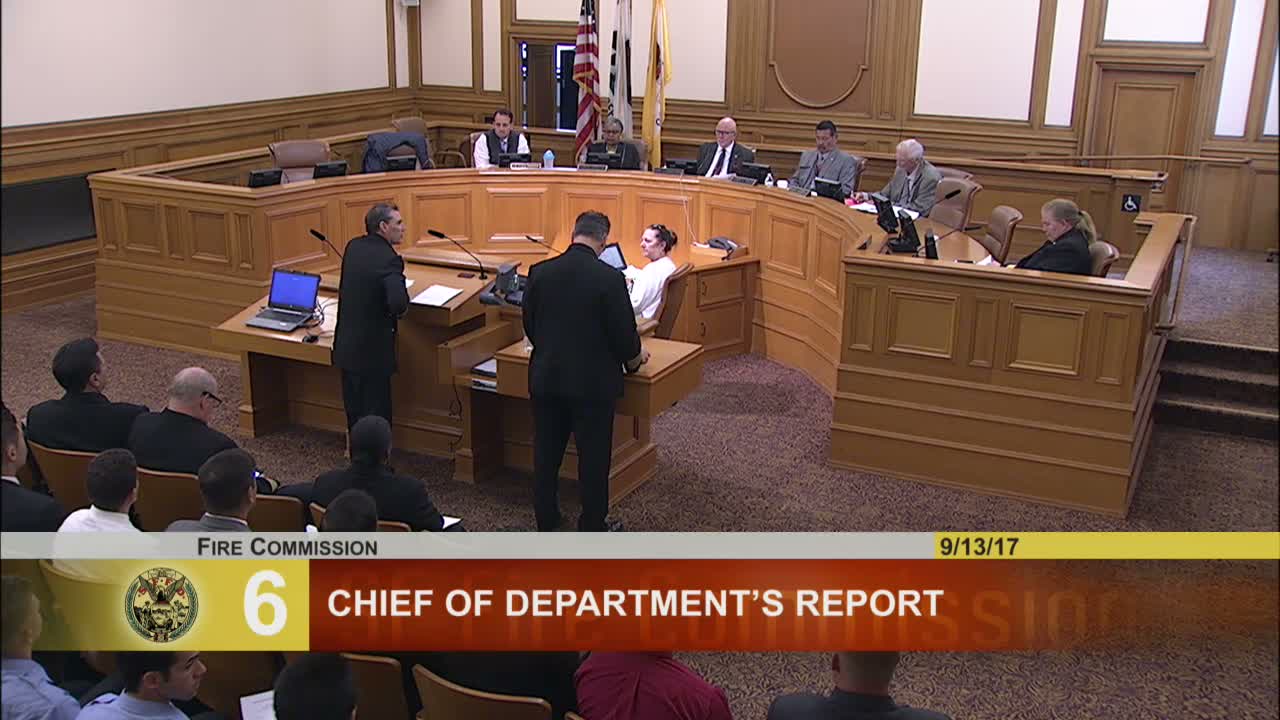
San Francisco emergency services leaders told the Fire Commission on Sept. 13 that the city’s EMS and fire response managed an unprecedented spike in calls during the Sept. 1–4 heat event and Labor Day weekend while preserving near-normal response times.
"In the 4 day period from September 1 to 09/04/2017, our department responded to over 2,400 calls for emergency assistance. That's more than double our normal call volume," said Andy Zanoff, EMS Chief. He credited interagency coordination through the Emergency Operations Center (EOC), mutual-aid units from neighboring counties and private providers for helping meet demand; mutual-aid units ran 123 calls and transported 73 patients over Friday and Saturday of the surge.
Zanoff said first units still arrived in just over five minutes on average and ALS first units arrived in six minutes, 35 seconds — within county response requirements. He and Deputy Chief Mark Gonzales also noted expanded use of surge resources including multi-casualty buses and deploying EMS6 as a quick-response vehicle.
To optimize resource use, the department described a six-week pilot (implemented in September) to refine dispatch assignments using the Medical Priority Dispatch System (MPDS) determinants. Dr. Clement Yeh, the program's medical director, said the pilot identifies Alpha/Bravo/Charlie MPDS call types that do not require two paramedic-level providers and dispatches an ambulance plus one engine rather than two ALS providers when clinically appropriate. "Every call that we are responding to is receiving ALS level care," Dr. Yeh said, explaining that the pilot focuses on timing and prioritization rather than denying care.
Commissioners asked for reassurance about patient safety and data monitoring. Dr. Yeh and Chief Zanoff said the pilot will include ongoing data collection and analysis, and the medical director committed to reporting results back to the Commission.
The department will also appear before the Government Audits and Oversight Committee to review response performance following the surge.