Get Full Government Meeting Transcripts, Videos, & Alerts Forever!
Get email alerts on the Mutual Aid Wildfires topic
No spam. Unsubscribe anytime.
San Francisco strike team credited with lifesaving work, long deployment in North Bay fires
Summary
Assistant Chief Siragusa and SFFD leaders told the Fire Commission the department’s strike team deployed on short notice to the North Bay fires, conducted evacuations and structure protection over several days, and will be recognized in upcoming meritorious ceremonies.
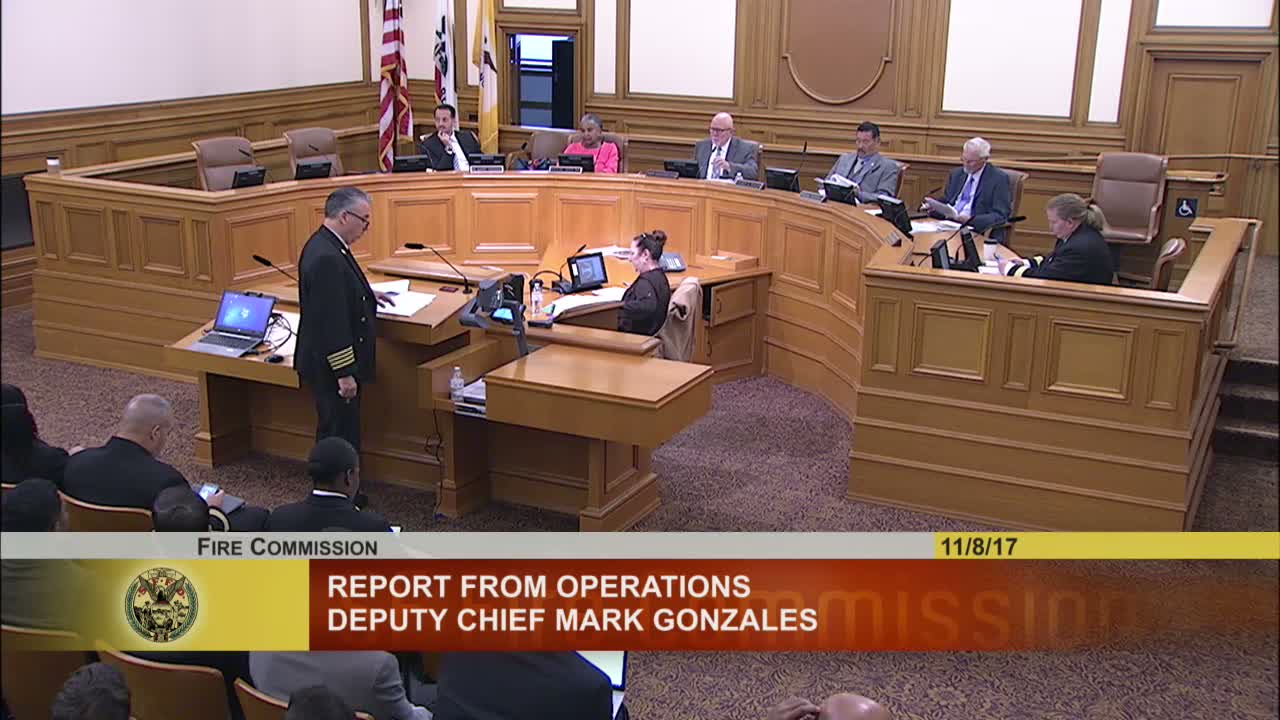
Assistant Chief Siragusa gave the Fire Commission a detailed account of San Francisco’s strike team deployment to the North Bay wildfires, saying the crew "were the first strike team to arrive into that neighborhood" and conducted door-to-door evacuations and structure protection through sustained, multi-day operations. He said the team worked without relief for long shifts and emphasized the physical and emotional toll of the response.
Deputy Chief Mark Gonzalez and other departmental leaders told commissioners the city sent 12 engines and roughly 54–55 personnel as part of the strike-team deployment. Commissioners and chief officers described numerous local and regional mutual-aid partners, including other Bay Area strike teams and state assets, and said those mutual-aid arrangements were essential in keeping fires from consuming larger portions of affected neighborhoods.
Commissioners pressed for follow-up documentation and training opportunities. Several asked that strike-team members and specific crews be publicly recognized; Chief Hayes White said those actions have been documented and will be included in upcoming meritorious recognition. Commissioners also recommended a videotaped panel or after-action briefing so lessons learned can be preserved for training purposes.
The commission heard testimony about personal losses among responders: one speaker noted many stories where responding members also lost homes. Siragusa and Gonzalez described plans to seek five replacement strike-team engines from the State OES and to continue equipment and training investments to maintain regional response capacity.
Next steps: the department said narratives and after-action materials will be prepared for wider distribution to the commission and for use in training.