Get Full Government Meeting Transcripts, Videos, & Alerts Forever!
Get email alerts on the Inspections Reform topic
No spam. Unsubscribe anytime.
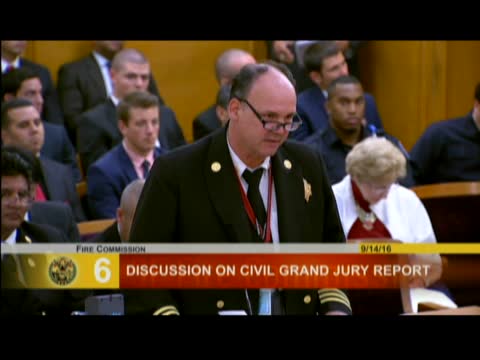
Fire marshal outlines reforms after Civil Grand Jury report on inspections
Summary
Fire Marshal Dan D'Ocasio told the Fire Commission the department is revising R1/R2 inspection checklists, launching weekend inspections and advance notice letters, creating a consolidated Fire Complaint Section, and implementing tracking and deadlines to address the grand jury's findings.
Fire Marshal Dan D’Ocasio presented a departmental response Sept. 14 to the Civil Grand Jury’s report on fire safety inspections, describing a package of process, training and staffing changes the San Francisco Fire Department says will address the report’s findings.
D’Ocasio summarized the grand jury’s top findings — including that SFFD and the Department of Building Inspection (DBI) do not coordinate inspections — and described steps SFFD is taking: extending inspection windows (including weekend inspections), sending letters 30 days in advance to owners of R2 (multi‑unit residential) properties, revising R1/R2 checklists and inspection manuals, and producing an inspection training video for field personnel.
The marshal announced the creation of a consolidated Fire Complaint Section that will centralize intake and follow‑up for all complaints. The team will include a captain serving as the accelerated code enforcement (ACE) liaison, one lieutenant and six fire inspectors, plus staffing to act as a community outreach pair (a fire investigator and inspector).
D’Ocasio detailed timelines for abatement: priority violations (impairments to life‑safety systems) will be scheduled for follow‑up in 72 hours with limited extensions; standard violations will have 14 days to abate and may extend up to 30 days before referral to administrative hearing. He said the bureau will post notices of violation and hearing dates on affected properties and serve notices by mail to improve transparency.
Commissioners pressed for public clarity on R1 vs. R2 designations and how on‑site notices will be posted; D’Ocasio defined R2 as a non‑transient multi‑unit building (three or more units occupied 30+ days) and said posted notices will be placed in common areas so occupants can see them. He also described plans to better link inspection and complaint records in the department’s back‑end systems so complaints and violations appear as a single tracked life cycle rather than disconnected entries.
What happens next: The department said it has scheduled administrative hearings, will roll out the training video and revised manuals, and will implement the new complaint section and IT linkage to improve tracking and transparency.