Get Full Government Meeting Transcripts, Videos, & Alerts Forever!
Get email alerts on the Emergency Preparedness topic
No spam. Unsubscribe anytime.
NERT volunteers describe 15,000 hours of neighborhood preparedness work and ask San Francisco to boost funding
Summary
Neighborhood Emergency Response Team leaders told the Fire Commission they logged nearly 15,000 volunteer hours in 2015, trained thousands of residents and operate 62 neighborhood teams; presenters asked the city for expanded outreach funding and one additional full-time position estimated at $80,000–$100,000.
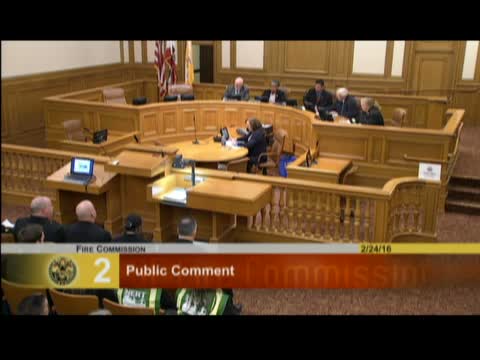
Lieutenant Erica Articeros and members of the Neighborhood Emergency Response Team told the San Francisco Fire Commission on Feb. 24 that the volunteer program is a neighborhood-based force multiplier that helped train thousands of residents for earthquake and other disasters.
Articeros said NERTs work focuses on retention and readiness after training, and described the programs "four pillars": neighborhood, effective, infrastructure and team. Advisory-board members reported 26,000 people trained historically and roughly 7,000 currently within the two-year certification window; Rebecca Lebersbach said NERT volunteers logged nearly 15,000 hours in 2015 alone and noted that, under FEMA Recovery Policy 09/2005, donated volunteer hours can be credited for certain public-assistance grant matching in precedent jurisdictions.
The presenters outlined a range of offerings: SF Ready two-hour workshops, a ~20-hour basic course, advanced classes (ham radio, triage, light search-and-rescue), bilingual instruction for communities such as Chinatown, and two citywide drills (April and October) that rehearse neighborhood command-post operations. Robert Gelitta, a member of the advisory board, said the program fields about 62 neighborhood teams and uses a mass-notification service (regroup.com) to reach volunteers.
Commissioners asked about funding. Articeros said NERTs current budget is $450,000, covering instruction, retention activities and one full-time salaried position, and requested additional funds to sustain day-to-day operations and expand outreach. On staff cost follow-up she estimated the new position (salary plus benefits) would run approximately $80,000 to $100,000 annually.
Commissioners praised NERT and suggested broader outreach to schools and non-English-speaking communities; they and department staff discussed partnering with the fire prevention division, City College and community groups. Articeros asked the commission to assist with citywide marketing and recruitment as the program develops a teen NERT track.
The presenters also flagged the programs recovery value: Lebersbach cited FEMA guidance saying donated volunteer hours can sometimes be credited as eligible donated resources during disaster recovery efforts, potentially reducing local matching costs for Public Assistance grants. The departments staff said they would raise resource and outreach options with the mayors office and budget staff.
The commission did not take formal action at the meeting; staff and commissioners requested budget follow-ups and more detail on a proposed additional position.