Get Full Government Meeting Transcripts, Videos, & Alerts Forever!
Get email alerts on the Ems6 topic
No spam. Unsubscribe anytime.
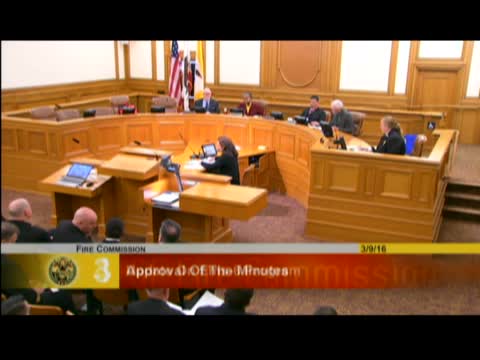
San Francisco Fire Department says EMS 6 pilot has 221 encounters in first five weeks; city debates 24‑hour expansion
Summary
Medical Director Clement Yeh told the Fire Commission the EMS 6 outreach team has completed about 221 encounters in its first 30 days and operates noon–midnight; staff and commissioners discussed outcomes, data‑sharing and budget implications for expanding the team to 24/7 service.
The San Francisco Fire Department’s medical director, Clement Yeh, told the Fire Commission on March 9 that the EMS 6 pilot team has been operational for about five weeks and is running daily from noon to midnight to reach high users of 911 services and connect them with city resources.
Yeh described the EMS 6 model as a paramedic‑supervisor and a Department of Public Health (DPH) homeless outreach specialist co‑staffed on calls and in outreach: “The EMS 6 team is operational and has been operational for the last 5 weeks for 12 hours a day, 7 days a week and it's essentially from noon to midnight.” He said the team responds to 911 incidents, can be specially called to clinics and hospitals, and works to coordinate care among providers.
Yeh and paramedic captains April Bassett and Simon Pang gave case examples of clients who stopped repeatedly calling 911 after team interventions: one woman arriving by bus was sheltered and connected to Homeward Bound and returned to her home state; another person identified as a VA patient was escorted to the VA and placed in long‑term stabilization. Yeh reported that “in the last 30 days there have been 221 encounters,” roughly seven per 12‑hour shift, and described many of those interactions as lengthy, coordinated engagements that required follow‑up and case management.
The presentation emphasized partnership with DPH’s homeless outreach workers and the need for improved documentation and data‑sharing. Yeh said next steps include training additional relief personnel, streamlining documentation, and strengthening data‑sharing between the Fire Department and the Department of Public Health.
Public comment and commissioners’ questions centered on whether the program should expand to 24 hours, the profile of frequent callers, and the program’s cost. Mike Cooley, president of the San Francisco EMS Officers Association, urged the Commission to move EMS 6 to 24‑hour operations, saying calls also arrive outside the team’s current hours and “people are still slipping through the cracks.”
CFO Mark Corso told commissioners the current 12‑hour staffing is budgeted at about $475,000 annually and that doubling to 24‑hour coverage would approach $1,000,000. Commissioners asked for follow‑up on client demographics (substance use, psychiatric illness and housing status), the program’s measurable outcomes, and specific budget figures for a proposed FY16–17 enhancement.
The Commission applauded the early results and directed staff to provide more detailed data and cost estimates to inform any discussion about expansion. The item concluded with a commitment from staff to return with additional operational and fiscal information.