Get Full Government Meeting Transcripts, Videos, & Alerts Forever!
Get email alerts on the Water Supply Awss topic
No spam. Unsubscribe anytime.
SFFD outlines how a 1906‑scale earthquake would be fought today, stressing water redundancies and mutual aid
Summary
At an April 6 Fire Commission meeting, Chief Joanne Hayes White reviewed how the San Francisco Fire Department would respond to a 1906‑style earthquake and fire, highlighting the Auxiliarized Water Supply System, hydrant adapters, fireboats, cisterns and mutual‑aid coordination.
Chief Joanne Hayes White told the Fire Commission on April 6 that the San Francisco Fire Department has modernized systems and procedures intended to prevent a repeat of the 1906 catastrophe and to ensure a coordinated response to a large‑scale conflagration.
"The San Francisco Fire Department is comprised of 1,800 members, and we have an operating budget of approximately $220,000,000," Hayes White said, framing the department’s capacity and the resources it draws on during major incidents. She stressed that the department has layered redundancies for water delivery, communications and personnel.
Why it matters: The 1906 earthquake remains a reference point for city preparedness because ruptured mains and lack of firefighting water allowed fires to overrun neighborhoods. The department’s presentation sought to show what has changed — and what vulnerabilities remain.
What the department described
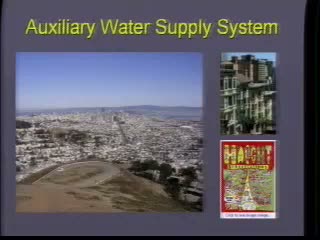
- Auxiliarized Water Supply System (AWSS): The chief said the AWSS, which was developed after 1906 and completed in 1913, is a gravity‑controlled loop and grid of reservoirs, cisterns and dedicated piping that can supply on the order of 12,000,000 gallons to firefighting and rescue operations. The system includes Twin Peaks reservoirs and additional smaller reservoirs and cisterns dotted throughout the city.
- Hydrants and adapter kits: Hayes White noted that San Francisco’s low‑pressure hydrant outlets are 3 inches, while many outside departments use 2½‑inch outlets. "We have addressed this problem and we've come up with a solution," she said, describing hydrant adapter kits distributed to neighboring departments so mutual‑aid engines can connect and operate effectively in the city.
- Fireboats, bay suction and manifolds: The department operates two fireboats, Phoenix and Guardian, and maintains bay‑suction and manifold inlets along the waterfront that allow boats to draft bay water and pump it into portable mains or the AWSS when pump stations or mains are compromised.
- Cisterns and portable mains: Hayes White said the city has 172 cisterns and portable 5‑inch hose and hose tenders positioned for rapid deployment; in previous earthquakes these above‑ground mains and drafting techniques were crucial to restoring water to fire lines.
- Communications and command: Modern 800‑MHz radio systems, satellite phones and an integrated incident command system (ICS) were presented as core layers of redundancy that improve multiagency coordination compared with 1906 and earlier disasters.
Department caveats and limitations
Hayes White cautioned that despite improvements, large disasters can overwhelm systems: pump stations may be damaged; some facilities no longer have 24‑hour staffing; and reserve apparatus and caches of equipment remain areas for continued investment. She also said the department relies on mutual aid and preplanned staging to coordinate incoming resources during a major event.
What comes next
The chief and commissioners discussed ongoing maintenance, seismic upgrades and the need to sustain caches of equipment and supplies. The department pointed to continuing drills with the Public Utilities Commission (PUC) to exercise use of emergency water supplies and to further coordination drills with mutual‑aid partners.