Get Full Government Meeting Transcripts, Videos, & Alerts Forever!
Get email alerts on the Accessibility Appeals topic
No spam. Unsubscribe anytime.
DBI and Access Appeals Commission outline appeals process as members urge simplifying rules for small businesses
Summary
DBI staff described the Access Appeals Commission’s role and the steps for unreasonable hardship appeals under the San Francisco Building Code; commissioners and AAC members pressed for simpler procedures, outreach and city support to reduce costs for small businesses.
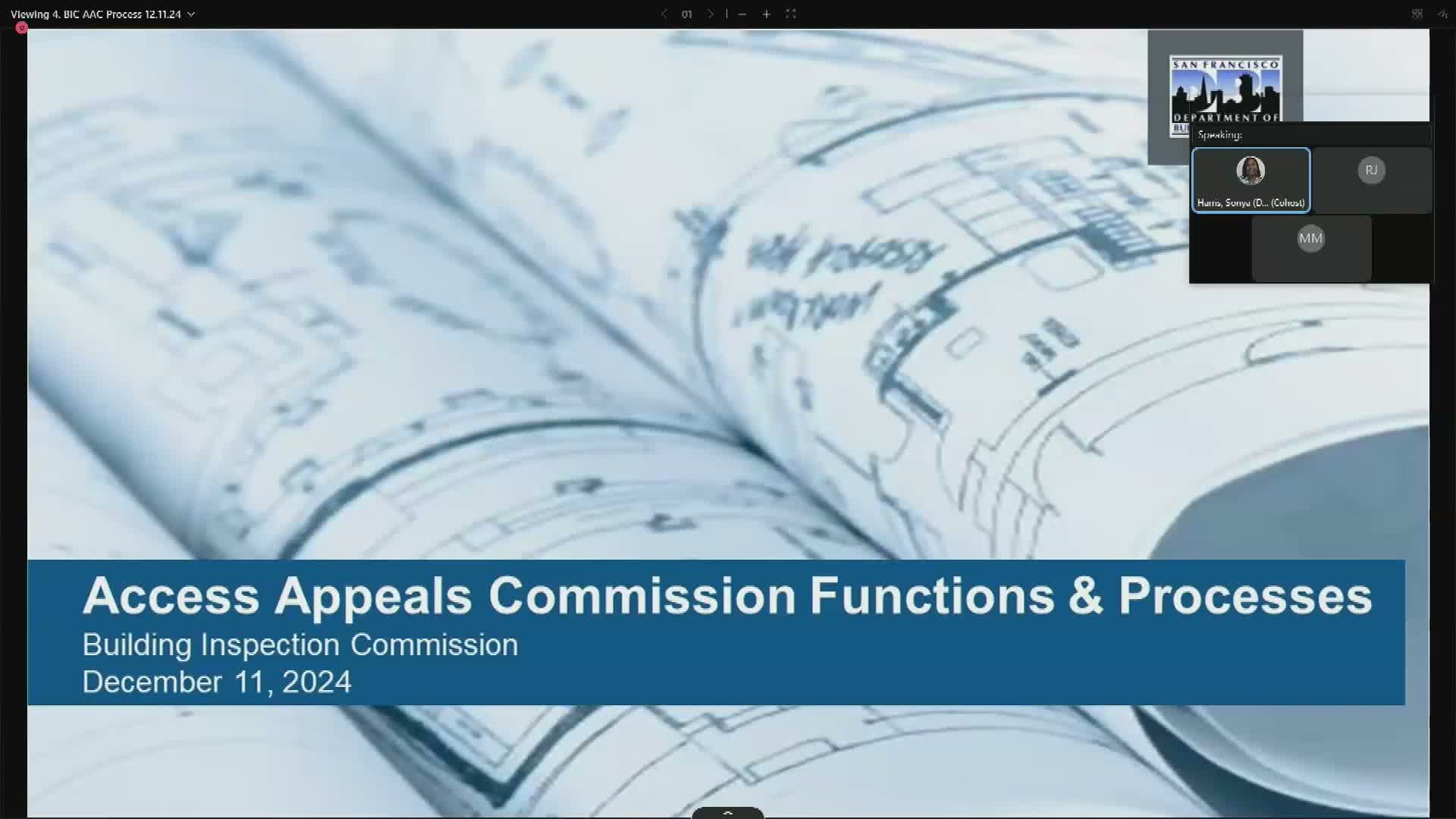
Mary Wilkinson Church of the Department of Building Inspection summarized how the Access Appeals Commission (AAC) handles appeals under the San Francisco Building Code, explaining the step-by-step process for unreasonable hardship requests, plan review, and hearings. "The Access Appeals Commission hears appeals of DBI decisions on the enforcement of disabled access and the adaptability provisions of the code," she said, and described the five-member AAC makeup including two members with disabilities.
Walter Park, an AAC member who said he authored the ordinance that created the commission, criticized the current intake and staff processes as onerous for small businesses and questioned the department’s published success rates. "The building department is stuck with such an onerous system that doesn't work for anybody," Park said, arguing many cases are effectively dispensed with via exemptions and that paperwork and staff delays discourage appeals.
Arnie Lerner, an AAC member and architect, urged DBI to promote alternatives such as curbside service and to share Office of Small Business guidance with operators. Lerner said modest accommodations can avoid costly public-works projects. "There are all kinds of alternatives," he said.
Commissioners pressed staff on whether the AAC or DBI requires licensed professionals for appeals and how to reduce costs for businesses that face $30,000–$70,000 upgrades to meet sidewalk or entry requirements. Mary Wilkinson Church said appeals may be brought by owners or tenants and that some applications list technical infeasibility or financial hardship; she and AAC members proposed greater outreach, clearer guidance, and potentially city-provided consultant support to help small owners prepare filings.
The commission asked DBI to provide additional data and bylaws for review and to consider ways to collapse public-works and planning steps that have driven up cost and delay. The discussion closed with agreement to return with more information and potential policy options for limiting burdens on the smallest businesses.