Get Full Government Meeting Transcripts, Videos, & Alerts Forever!
Get email alerts on the Permit Processing topic
No spam. Unsubscribe anytime.
DBI shows measurable gains after permit‑processing overhaul; rejection rate falls and digital review expands
Summary
DBI reported quicker completeness checks, digital concurrent review and dynamic staffing that reduced early rejection rates from roughly 33% to about 14% and improved time‑to‑first‑review; staff said nearly all completeness checks meet the state’s 15‑day requirement.
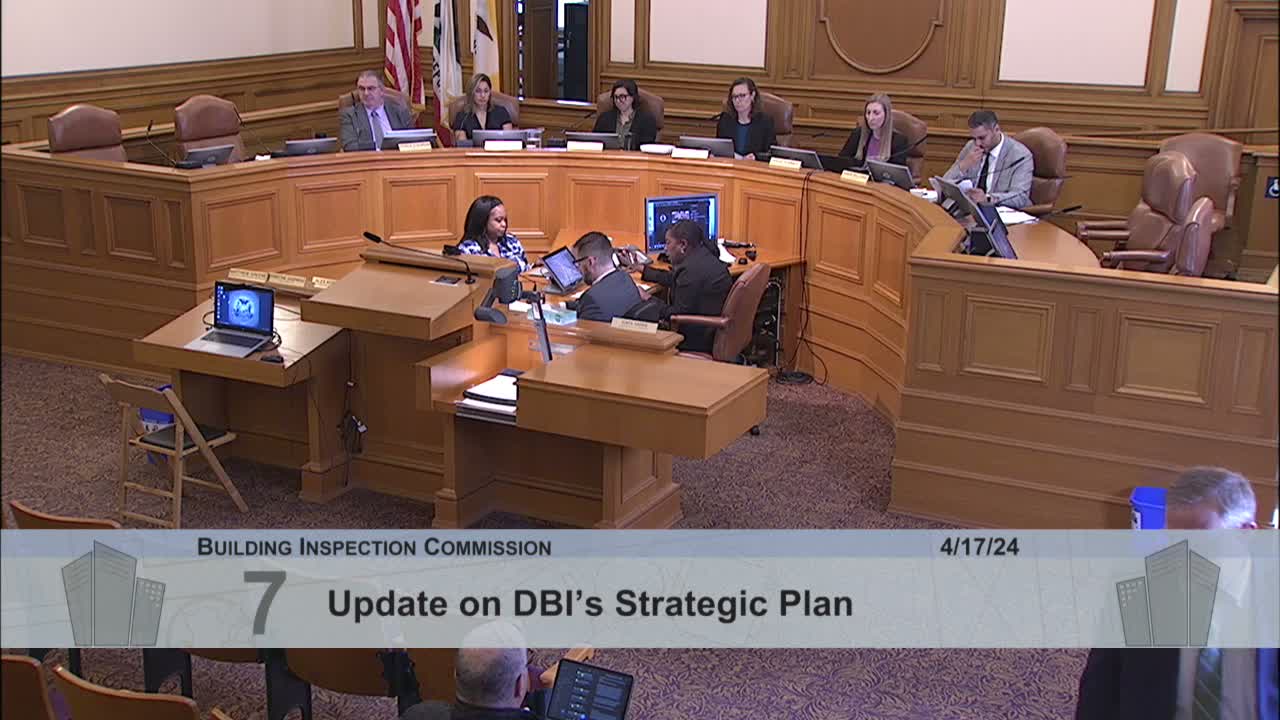
Deputy Director Neville Pereira told the Building Inspection Commission on April 17 that a series of process reforms have yielded measurable improvements in permit processing, including a drop in early rejection rates and faster review times.
Pereira said DBI’s Permit Services Division now operates three permitting pathways (instant online, over‑the‑counter and in‑house), has moved to 100% digital submittal and concurrent review, and uses a pre‑plan completeness check that front‑loads partner agency requirements. "When we started this program we were rejecting about 33% of projects as incomplete; at the beginning of 2024 that got down to about 14% rejection rate," Pereira said.
He described dynamic staffing and a Work‑In‑Progress dashboard that assigns estimated hours and routes projects to qualified plan checkers to avoid backlogs. Pereira said the department is meeting state deadlines for completeness checks and that average screening now takes about eight days, well under the state’s 15‑day allowance.
Pereira also highlighted that over‑the‑counter operations account for roughly 92% of DBI’s permitting volume and that in‑house projects total about 1,200 annually, generating roughly $1.5 billion in valuation last year. He said improved intake — including a planning approval letter requirement — helps screen projects that lack necessary entitlements before they enter the DBI review queue.
During public comment, Jerry Drattler praised the operational improvements and asked whether applicants can choose their plan checker; Pereira replied that the department does not allow applicants to choose plan checkers. Commissioners applauded the cross‑departmental collaboration behind the changes.
DBI officials said further improvements will depend on planned technology investments, including a phased replacement of the permit tracking system and continued work with partner agencies.