Get Full Government Meeting Transcripts, Videos, & Alerts Forever!
Get email alerts on the Impact Fee Reform topic
No spam. Unsubscribe anytime.
Commission backs package to cap annual impact‑fee increases, allow narrow fee holidays and reinstate deferral program
Summary
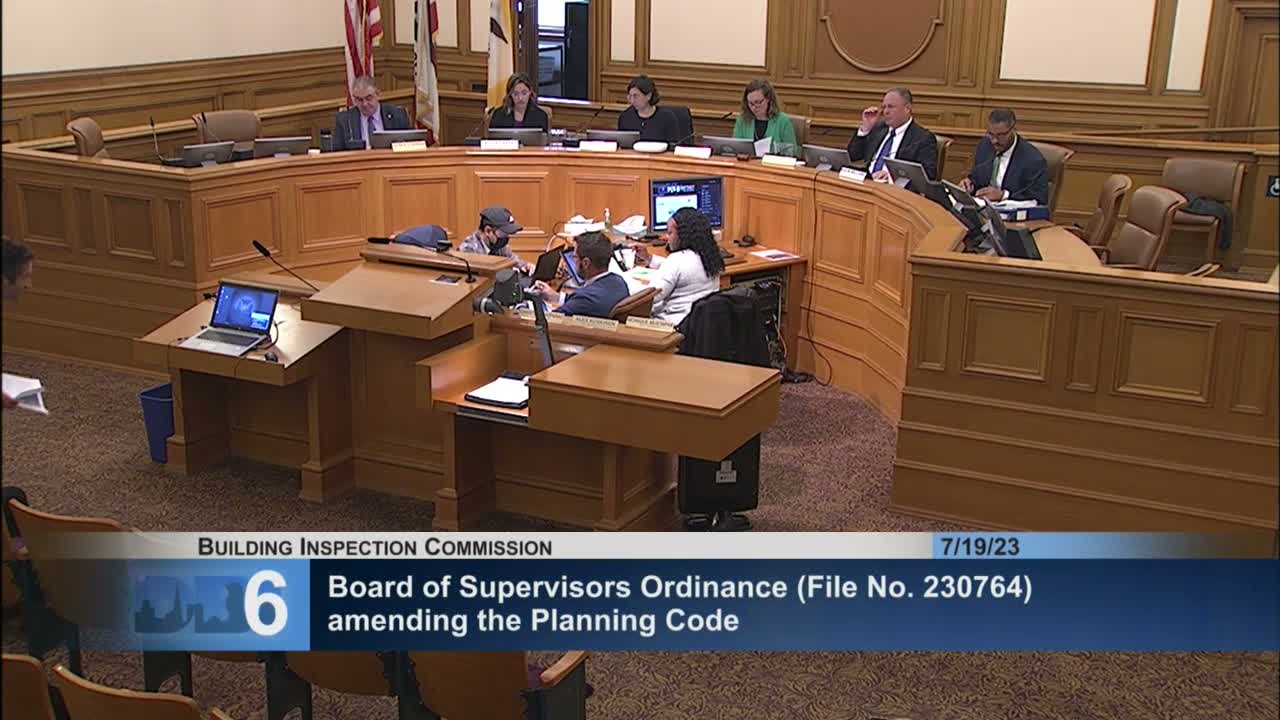
The BIC unanimously recommended the Board of Supervisors approve an ordinance (file 230,764) to replace AICCIE indexing with a 2% annual cap, lock in fees at planning approval, create limited three‑year fee holidays for targeted hospitality and PDR projects, and reinstate an impact‑fee deferral (excluding affordable‑housing fees).
The Building Inspection Commission voted unanimously to recommend approval of a package of planning and building‑code amendments intended to increase predictability for developers and stimulate select types of projects.
Dan Sider of the Planning Department summarized the ordinance (file 230,764) as four principal changes: replace the variable annual AICCIE escalation for development impact fees with a fixed 2% annual rate; lock impact fees at the time of planning approval so fees do not escalate while a project remains in the pipeline; provide a targeted three‑year impact‑fee holiday for certain hospitality projects in the city’s northeast area and for industrial/retail projects on underdeveloped PDR (production, distribution and repair) lots that meet specified FAR and square‑foot thresholds; and reinstate an impact‑fee deferral program so many fees could be paid at the time of first certificate of occupancy, while excluding affordable‑housing impact fees from that deferral and eliminating an original assessment of interest.
Supporters said the package would create predictability that helps projects secure financing and accelerate housing and job‑creating projects. Planning and economic development officials argued the measure would spur investment in hospitality and targeted industrial areas and align fee escalation with a predictable schedule.
Several commissioners expressed concern that replacing the AICCIE — an index tied to long‑range capital needs — with a 2% cap could understate the city’s true capital costs and reduce funds for parks, streets and other facilities. Staff acknowledged the city budget analyst office had not yet performed a thorough fiscal impact analysis and said some pipeline projects might seek administrative adjustments to take advantage of related provisions in companion legislation.
The commission motioned and voted to recommend approval; the recommendation will be forwarded to the Board of Supervisors for consideration.