Get Full Government Meeting Transcripts, Videos, & Alerts Forever!
Get email alerts on the Building Enforcement topic
No spam. Unsubscribe anytime.
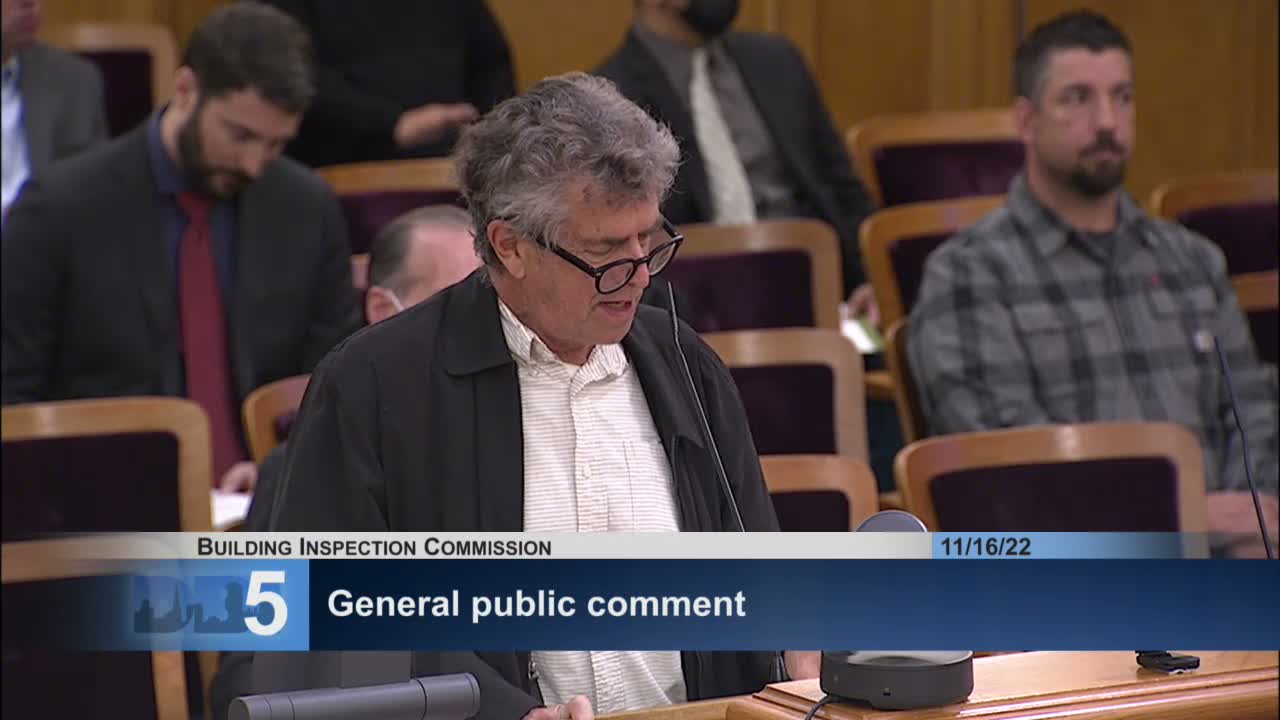
Residents, a retired CFO press DBI on elevator maintenance loophole and use of $1 administrative permits
Summary
A resident and a public commenter raised two enforcement concerns during public comment: an alleged elevator‑maintenance '50‑foot loophole' that allows 4‑story elevator buildings to avoid maintenance obligations, and multiple examples where DBI used administrative permits to final expired building permits; both issues prompted requests for code fixes and procedural review.
Three public speakers used the commission’s public comment period to press DBI on building‑safety and permit‑finalization practices.
Architect James Heron described a gap in the housing code that he said allows elevator maintenance to be avoided in many four‑story residential buildings. "The housing code, however, seems to suggest that only elevator buildings 5 stories or more are required to maintain those elevators," Heron said, adding that his building at 2960 Polk Street — a four‑story, 12‑unit elevator building — was left without a working elevator when an owner appealed a director’s order of abatement by invoking what Heron called a "pernicious 50 foot loophole." He urged the commission to correct the code to protect seniors and residents with disabilities.
Jerry Drattler (public commenter) raised a separate but related oversight concern about DBI’s use of administrative permits to final expired building permits. Drattler provided examples including 418 Congo Street, 555 Fulton Street and a long‑running 2013 permit for 55 Fulton, and alleged DBI issued $1 administrative permits to final work that previously had open, high‑value permits. "DBI should not use administrative permits to final building permits," Drattler said, and asked the commission to change practice and increase oversight.
DBI staff did not offer an immediate policy change during the meeting but acknowledged the concerns and said they would follow up. Commissioners heard the testimony and did not vote on a code change that day; they encouraged staff to take the comments into account and to provide additional information about administrative permit use and the interpretation of elevator maintenance rules at a future meeting.
Next steps: Commissioners requested follow‑up information from staff on administrative‑permit practices and a clearer explanation of the housing‑code provisions that govern elevator maintenance for lower‑rise buildings.