San Francisco officials roll out permit‑center changes and a pre‑plan review to speed approvals
Loading...
Summary
City permit staff presented a package of operational changes — a staffed Permit Center, a pre‑plan check pilot that categorizes projects by expected plan‑check hours, new customer service tools and a digital roadmap — intended to shorten review times and provide clearer timelines for businesses and builders.
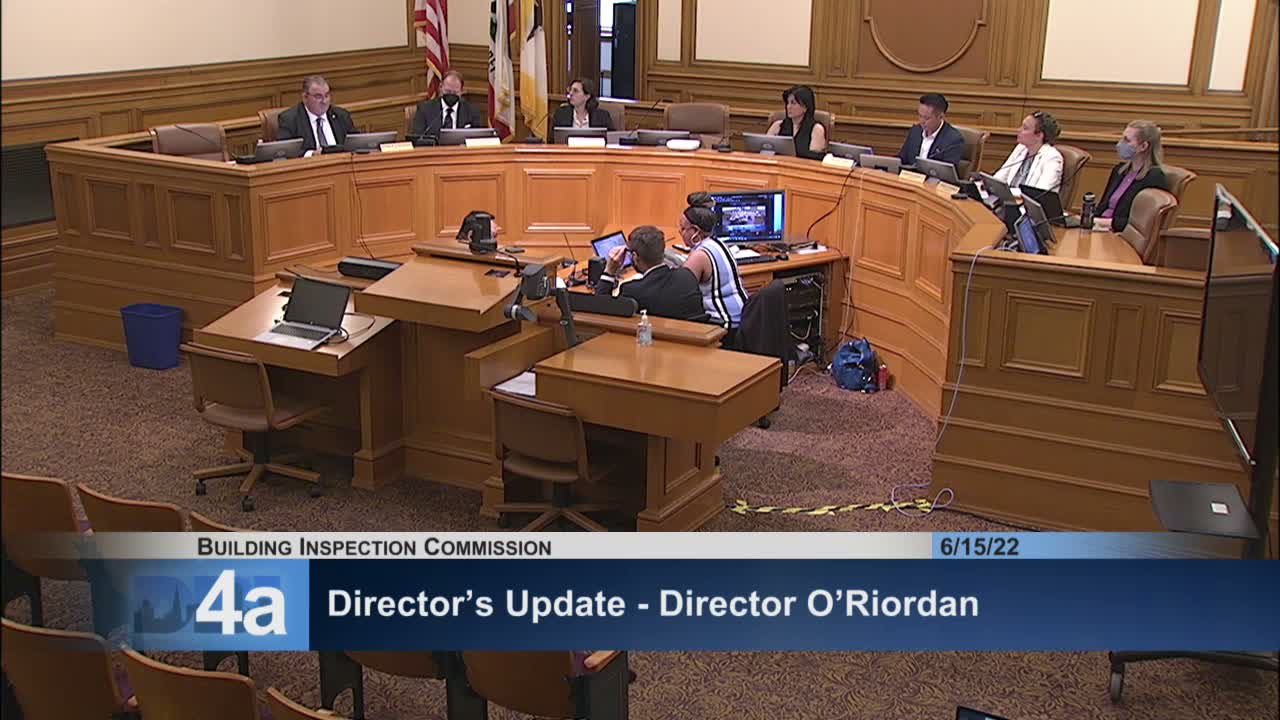
At its June meeting, the Building Inspection Commission heard detailed plans for operational changes intended to speed permit approvals and give applicants clearer timelines. Rebecca Mayer, director of the city dministered Permit Center, and Deputy Director Neville Pereira of DBI described a pair of near‑term reforms: a customer‑facing Permit Center that consolidates intake and a pre‑plan check pilot that will screen submittals and route work to plan‑check staff.
The reforms aim to reduce back‑and‑forth and make workloads predictable. "On average, it's about 12 minutes" to wait at the Permit Center, Mayer said, while describing a floor with roughly 91 stations and a majority of counters staffed by DBI. Neville Pereira said the pre‑plan review embeds plan examiners at intake to confirm submittals are complete, assign an estimated level of effort and route projects so smaller jobs are not held behind large ones.
Why it matters: San Francisco has struggled with uneven plan‑check times and disconnected tracking systems. The Permit Center is intended as a one‑stop, in‑person intake that also consolidates basic online services, payment kiosks and a print center. Officials said the pre‑plan check will classify most work into four levels by expected DBI plan‑check hours and set target initial‑review timelines (level 1/OTC: same day or within 2 business days; level 2: initial review within 20 business days; level 3: 30 business days; level 4: 40 business days).
Supporting details: Director Reardon and staff paired the reforms with several operational moves: Chris Vergara was introduced as a new compliance manager; a "small business inspections ambassador" program launched to help businesses complete last‑mile requirements for certificates of occupancy; and DBI's web pages are being migrated to the central sf.gov platform. Pereira said DBI will publish checklists and work with other agencies so routing reflects joint review needs (for example, public works or public health). Ray Law, legislative affairs manager, noted pending state legislation that could require additional scheduling or digital standards.
Data and limits: Staff acknowledged data limitations. Pereira said the pilot used a baseline sample (151 projects drawn from 2019 data) to estimate current lag times and that some projects were misclassified when the team reviewed descriptions blind. To prevent future mislabeling, staff will write form‑type identifiers into the permit tracking system and publish intake checklists online. Mayer and DBI staff said systems are currently disconnected: PTS, Bluebeam plan review and other departmental databases do not exchange real‑time APIs. Mayer said a consultant has been engaged to propose middleware and an architecture to aggregate data across systems so customers can see "project"‑level status rather than separate permit numbers.
Next steps and oversight: Pereira said the pre‑plan review rollout begins July 1 for initial categories and reporting to the Controller's Office; staff will refine metrics and add rechecks and rejects to the weekly workload as staffing permits. Commissioners asked for follow‑ups on KPIs and a return presentation in the fall to show progress. Mayer said the Permit Center will continue to evolve and that staff welcome public and commissioner feedback as the city builds a unified data picture.
Quotes: "These are major operational improvements to our business that will create more certainty and clarity for our customers," Director Reardon said. "We want customers to succeed the first time they show up at the counter," Pereira said of the required intake checklists.
Ending: Commissioners generally praised the proposals and requested periodic updates — both in department reports and at future commission meetings — to monitor whether the pilot meets the published time targets and to ensure the new data flows get implemented.